
What Are Energy Management Solutions, and Why Does Every Commercial Building Need Them?
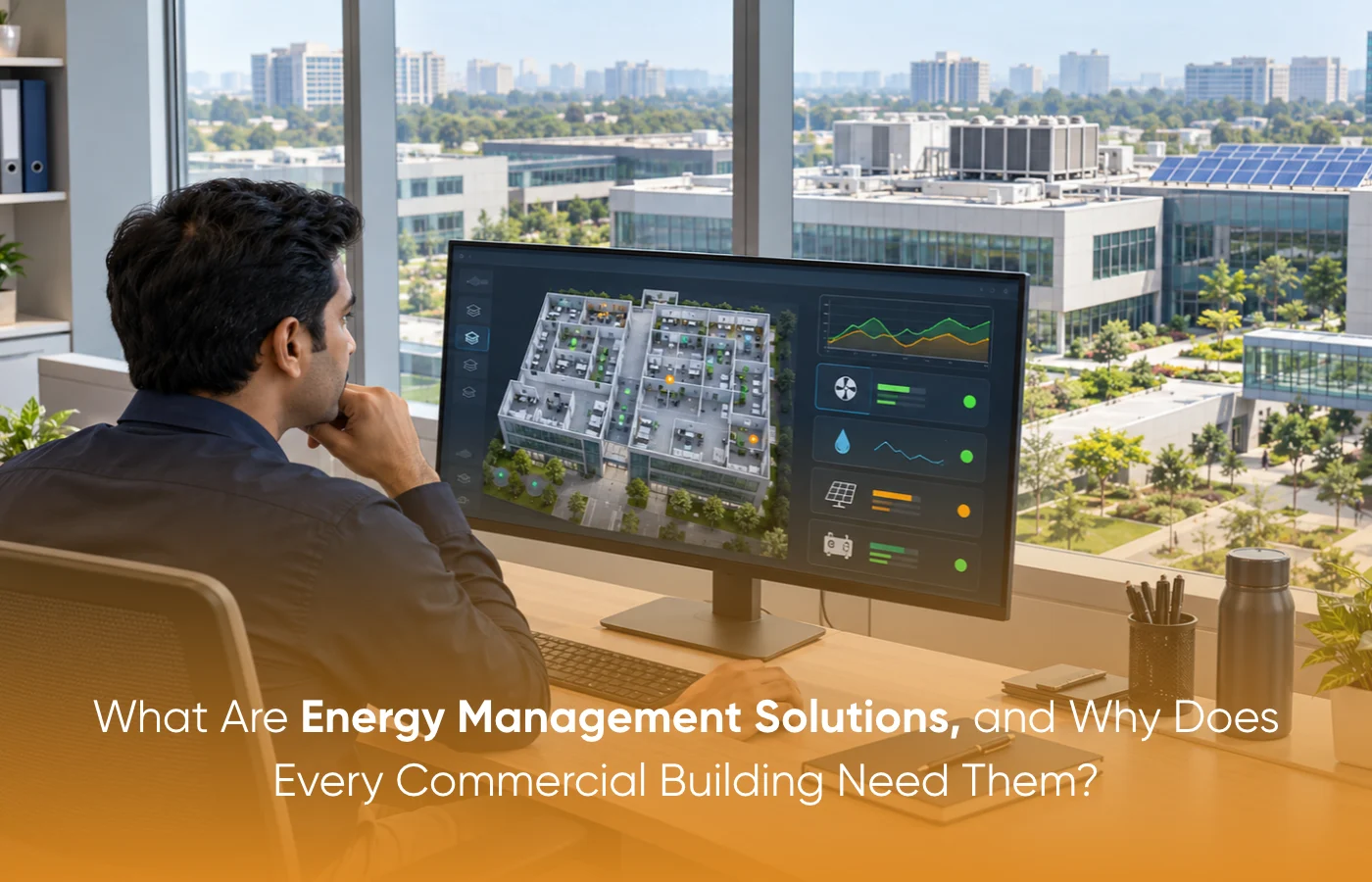
Energy Management Systems link up all the electricity, mechanical, and utility systems together into one single system for monitoring, detecting any wastage, and controlling energy consumption. It can manage all this without focusing on individual systems such as heating, ventilation, air conditioning, lights, water, solar power, and backup power. The buildings that implement such an energy management solution are guaranteed to save energy costs and maintenance costs during their first year of operation.
1. Centralized monitoring of electrical, water, gas, and HVAC systems.
2. Detecting any inefficiencies and fault before they develop into major maintenance problems.
3. Helpful in complying with green building certification requirements.
4. Work with both new buildings and old buildings.
What Problem Do Energy Management Solutions Actually Solve?
The vast majority of business facilities operate on an integrated infrastructure that was never intended to communicate with each other. Industrial statistics reveal the presence of quite a significant number of facilities that use legacy and non-compatible technology, which is commonly called spaghetti architecture, in which each of the systems, including fire safety and elevators, operates at its own level independently from others and without any common integration mechanism.
1. Fire safety, HVAC, elevators, and electrical are all isolated silos.
2. Facility management staff has to inspect each of these systems independently.
3. Problems are identified only when it is too late, due to the tenant’s complaints or during inspections.
4. There are no common statistics about where the energy is spent.
Energy management solutions resolve the problem by integrating all of the above-listed systems into a single infrastructure. Facility management staff stops moving around five different control panels and operates at a single dashboard.
How Do Energy Management Solutions Actually Work?
The energy management solution gathers live data through sensors and meters placed throughout the building. This data gets processed on a centralized software platform, where inefficiencies are automatically detected and reported. Therefore, a commercial building equipped with energy management solutions receives a continuous flow of data rather than a monthly utility bill that comes with no other data.
1. Sensors and Meters: Installed on electrical, water, and gas lines, they collect real-time data on their consumption before it gets recorded on a utility bill.
2. Controllers: They control connected systems and adjust their functioning; for example, reducing the functioning of HVAC systems when a building is unoccupied overnight or reducing power supply to unused equipment.
3. Centralized Software: It is here where all collected data are processed in the form of dashboards and alerts, as well as recommendations for the facilities manager.
4. Communication Networks: They connect all sensors, controllers, and software platforms together, so that information from one system could influence the functioning of another.
An unoccupied building that has its HVAC system operating at maximum power at night is another typical case. The energy management software identifies this problem pattern and fixes it on its own without the intervention of a building manager.
This is the same disconnection problem a well-designed integrated BMS is built to solve, bringing fire safety, HVAC, elevators, and electrical systems onto one shared backbone instead of leaving each to run in isolation.
What Can Energy Management Solutions Actually Monitor Across a Building?
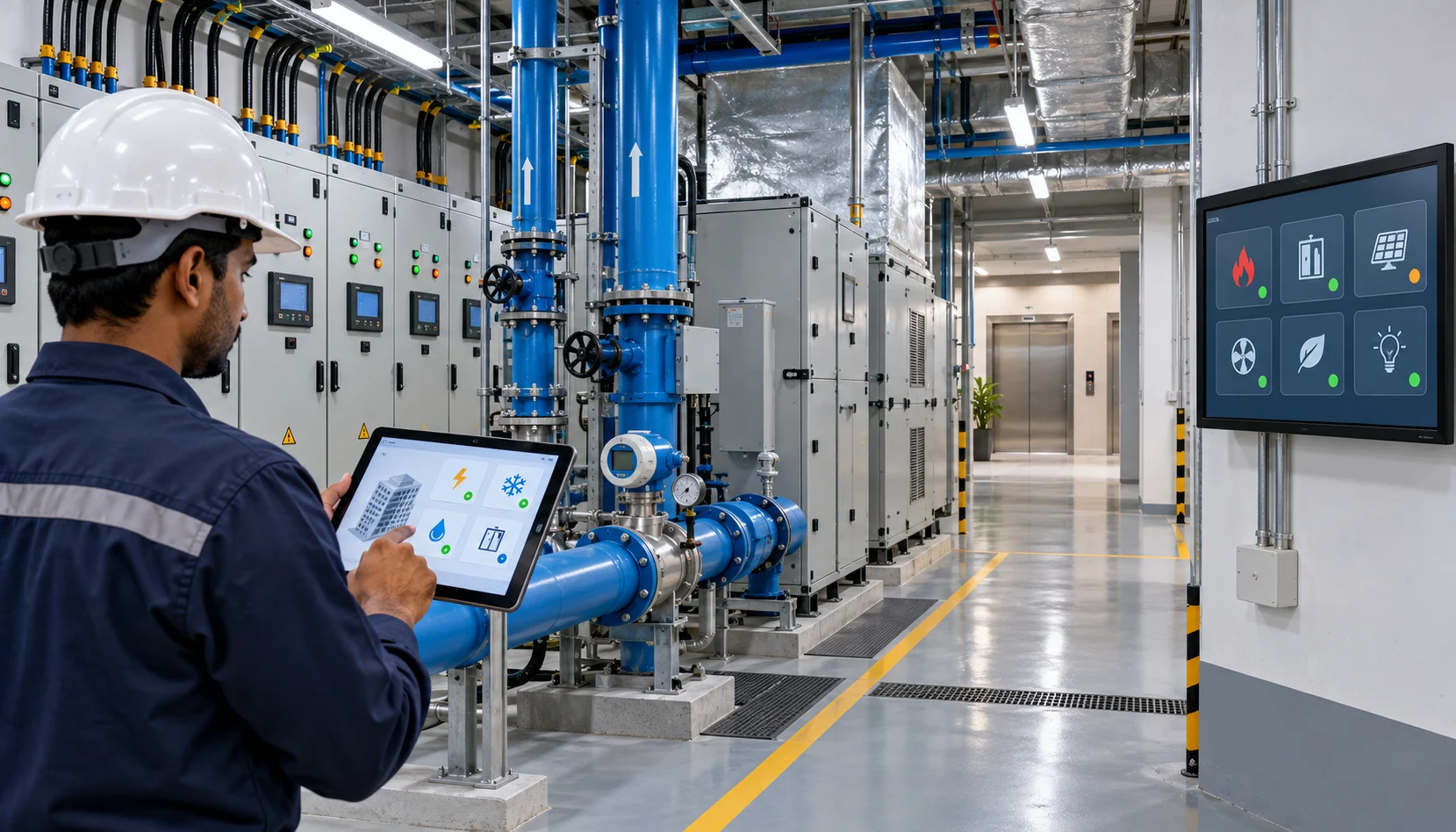
There is more to energy management solutions than merely electricity and HVAC. The complete solution covers almost every operational function in a commercial building, so facility managers have one place to look rather than ten.
1. Fire safety, smoke, and intrusion detection systems.
2. Electrical load management, UPS, diesel generator, and solar power production.
3. Water consumption, gas consumption, and plumbing systems.
4. Elevator operations, HVAC, and air quality in the building management.
5. Lighting control, louver control, and energy meters.
The significance of such a wide coverage of functions lies in the fact that energy losses come from several sources at once. For instance, a building experiencing financial losses with regard to electricity could also be consuming too much diesel fuel due to poor generator operation. There could be a hidden leak in the pipes leading to wasted water resources.
How Do Energy Management Solutions Reduce Operating Costs?
Energy management solutions save on expenses through the ability to detect wastage sooner rather than later and increase the lifespan of expensive equipment.
1. Predictive maintenance: The solution alerts facility teams when there is a risk of problems rather than allowing them to notice an issue only after the equipment broke down.
2. Malfunction detection: It detects any malfunction in advance, sometimes even before it can be seen in the increase of monthly expenses.
3. Decreased stress for the equipment: Early detection of inefficiencies leads to decreased wear and tear of heating, ventilation, and air conditioning equipment, elevators, etc.
4. Exact sub-metering: More exact measurement and billing, especially useful for multi-tenant buildings sharing costs of utilities.
5. Scheduling of maintenance in advance: Maintenance is done based on the real data about usage and not according to the pre-scheduled time, ignoring any wear and tear.
According to a fault detection study published by Springer, predictive models can catch building equipment faults with close to 85% accuracy, well before they turn into a visible spike on the energy bill.
All these benefits add up. When a water leak is detected in time by the solution, it helps the building not to pay both for the wasted water and additional repair caused by the leak.
How Do Energy Management Solutions Support Sustainability Goals?
The energy management system helps in reducing the carbon footprint of the building. There is a huge amount of emissions due to energy consumption from buildings, and most of them take place during operation rather than in the process of construction. Therefore, operational efficiency becomes one of the key factors that a facility team manages.
1. Less energy consumption means a smaller carbon footprint.
2. Automated tracking helps with sustainability audits.
3. Certification processes such as LEED or WELL become simpler thanks to documentation.
4. Buildings are gradually reaching their goals in terms of net zero/net positive energy.
Both sustainable building automation and green building automation are built on the same principle of collecting real-time data. Otherwise, the target remains just a target that cannot be managed or improved.
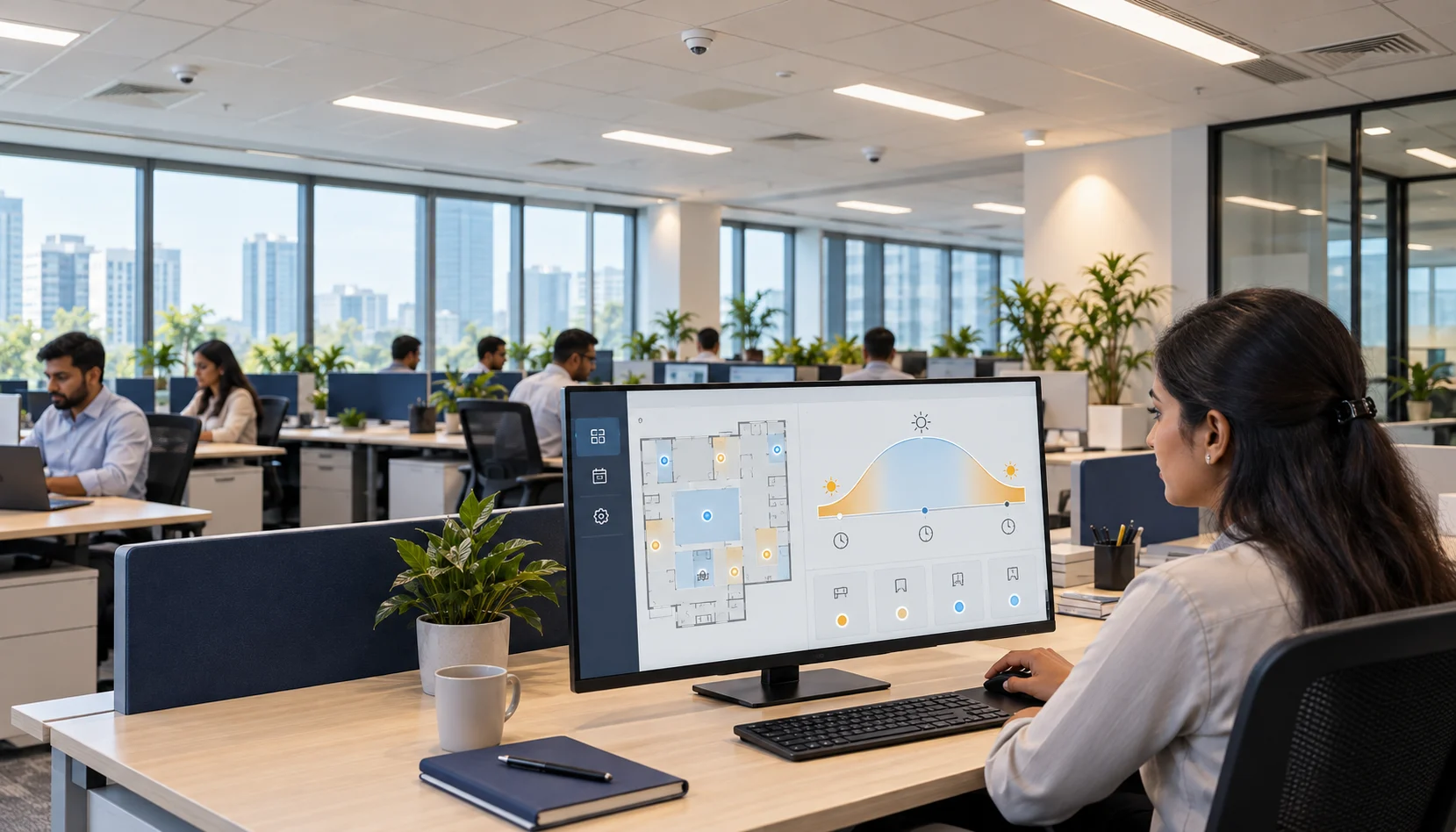
How Do Energy Management Solutions Improve Load Balancing and Building Intelligence?
1. Real-Time Energy Surges Alerts: Facility managers are informed as soon as any energy surge or risk of energy outage happens, not after it causes disruptions to their facilities.
2. Remote Device Management: The energy system can be adjusted to reduce or even turn off equipment without going through physical processes for each machine.
3. Building Intelligence Layer: The energy usage history helps in developing a clear picture of energy use in future planning.
How Does AastroTech Deliver Energy Management Solutions for Commercial Buildings?
The AastroTech fenergy management solution involves IoT hardware technology integrated into the wireless IoT hardware stack with an AI-powered platform, and this provides solutions in terms of monitoring, management, and return on investment (ROI). The facilities team is offered a single dashboard that monitors all areas ranging from fire safety to elevator systems, HVAC systems, solar, and lighting management, among others.
1. Monitors fire safety, UPS, electrical, elevators, solar, gas, and diesel generators.
2. Manages HVAC, plumbing, lighting management systems, air quality, and louvers.
3. Building portfolio performance, asset management, and maintenance management.
4. This AastroTech technology is developed to be used with either new infrastructure or legacy building infrastructure.
Final Thoughts
Energy management solutions make it possible to create a building where all those separate pieces become a system that facility management can see and manage. The efficiency is gained by identifying the problems early; no single solution is responsible for savings. For every commercial building that currently works through separate paneling and monthly utility bills alone, energy management solutions provide a clear way forward.
Not sure how much your building is actually losing to disconnected systems?
Talk to AastroTech for a quick energy assessment and see where the savings are hiding.
FAQs:
1. What is it that energy management solutions monitor within a commercial building?
The various systems that energy management solutions monitor include electricity loads, HVAC, water, gas, lighting, elevators, solar generation, and backup power. Facility managers can get information about all the systems on one platform rather than going through individual control panels for each system.
2. How fast can energy management solutions make a difference in a building's energy bill?
Energy management solutions usually take a year to show savings. Savings come from reducing waste, such as operation of equipment when nobody uses the facility.
3. Can energy management solutions be implemented in older buildings?
Yes, since energy management solutions are designed to be compatible with legacy systems. The facility does not have to make any changes to its current infrastructure to be able to implement the platform for management.
4. Can energy management solutions help with green building certifications?
Yes, since energy management solutions automate usage tracking that is required for certifications such as LEED and WELL. This saves facility management from having to perform all this work manually.
5. In what way do energy management solutions help in achieving sustainable building automation?
Energy management solutions offer the immediate data necessary for sustainable building automation. With no data on how much energy is being consumed in the facilities, the sustainability goal remains abstract. Through such solutions, the goal becomes tangible.
6. In what way is AastroTech’s energy management solutions different from a typical BMS?
AastroTech provides facility managers with a single system that offers monitoring, management, and return on investment measurement through artificial intelligence technology, rather than having multiple tools. Facility managers can access information about fire safety, HVAC, solar panels, and lighting management using just one dashboard.
7. Does AastroTech's platform require new hardware across the entire building?
No, AastroTech’s energy management solutions work with existing infrastructure wherever possible, including legacy systems. The platform is designed to integrate rather than force a full hardware replacement before monitoring can begin.
8. Does the energy management solutions of AastroTech have an ability to record the return on investment (ROI)?
Yes, the AastroTech solution includes building portfolio tracking, asset management and maintenance. Efficiency improvements will help facilities measure the results, including financial returns, beyond simple reductions in utility expenses.
9. Which type of facilities are eligible for using the AastroTech energy management solutions?
AastroTech energy management solutions operate in all types of commercial real estate properties including systems for elevators, solar, water and air quality management. The same dashboard applies to one or several building facilities at once.
10. How does AastroTech support facility teams after installation?
AastroTech provides ongoing maintenance and support as part of its energy management solutions, not just the initial setup. This includes ROI tracking and asset management, so facility teams have continued visibility long after deployment.