
Smart Parking Technology
for Smarter Management
What is Smart Parking Technology?
Key Highlights:
● Real-time parking availability tracking
● Sensor and camera-based slot detection
● QR, RFID, and FASTag-enabled access control
● Mobile app booking with digital layouts
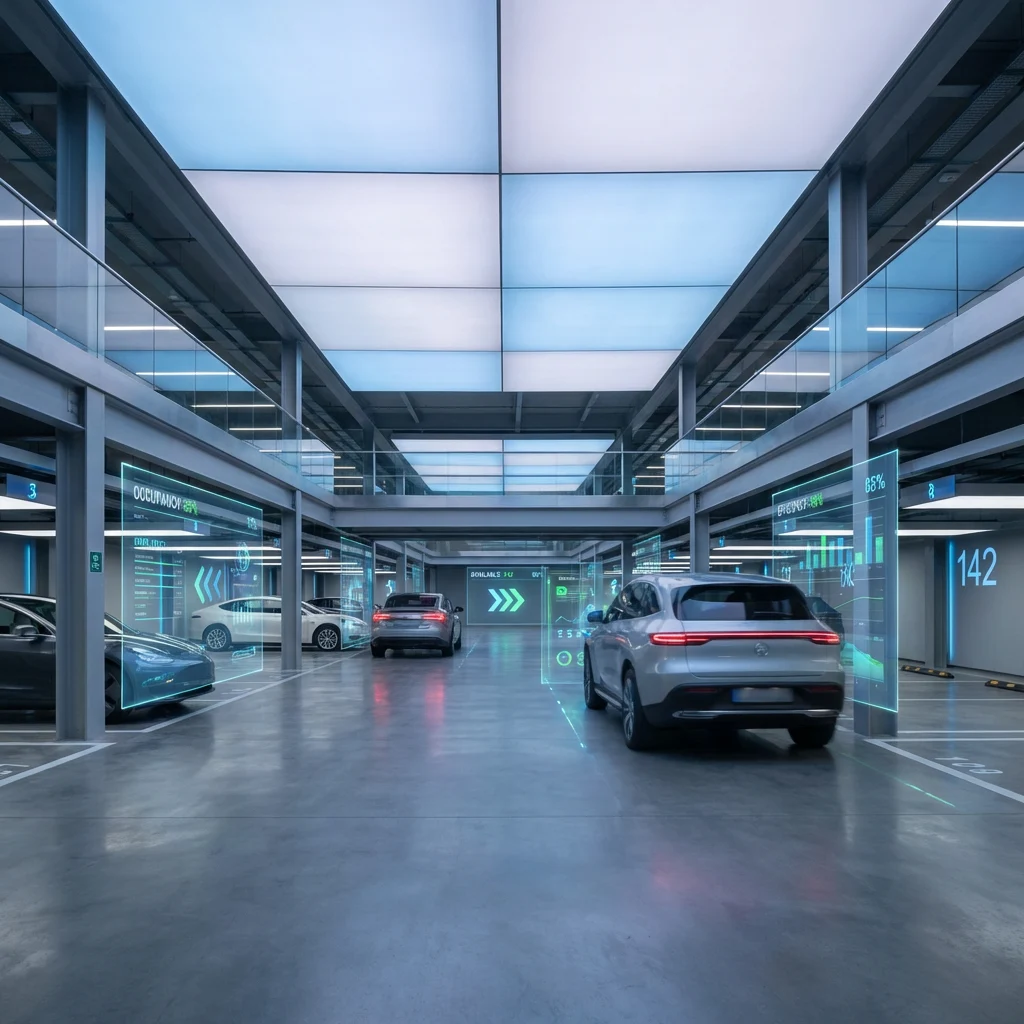
● Smart navigation through LED indicators
● Integrated payment systems with UPI and online modes
What is Smart Parking Technology and Why Does It Matter?
Smart parking technologies make use of live feeds, connectivity, and automation to optimize parking slots through modern establishments. This innovation has helped shift from the conventional manual method of parking slots’ management to intelligent methods that direct people towards open slots, facilitate access, and allow monitoring by facility administrators. This ensures that all processes in relation to parking slots become systematic.
In situations where parking slots experience variations due to time-based demand, smart parking technologies play a crucial role in ensuring the efficient management of parking slots. Such facilities include corporate parks, shopping malls, hospitals, airports, and multi-storeyed buildings.
How Does Smart Parking Technology Work in Real Environments?
1. Ultrasonic Sensors
Detect slot occupancy instantly. Data updates the moment a vehicle enters or leaves.
2. Camera Systems
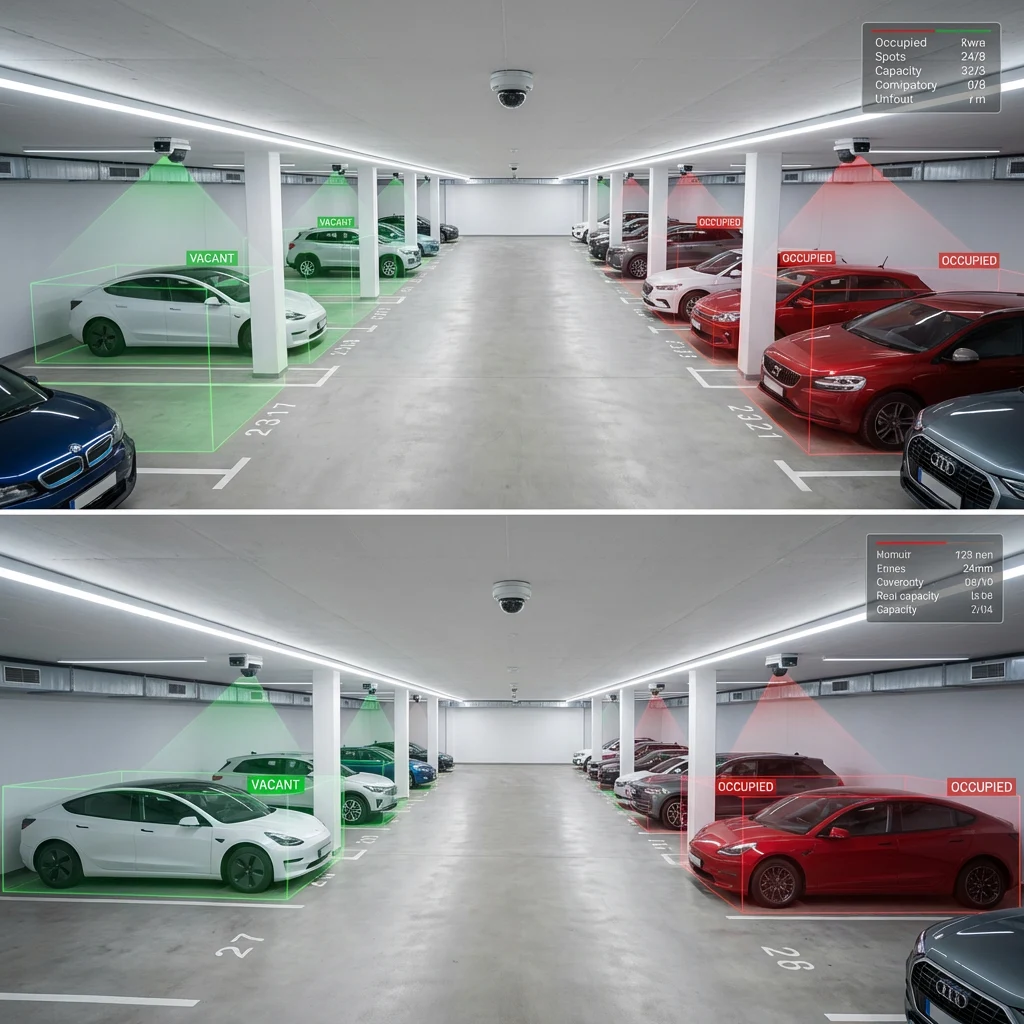
One camera monitors multiple slots simultaneously with edge processing for low latency and low bandwidth usage.
3. Digital Displays
Show live slot counts at entry points and floor transitions before drivers start searching.
4. Mobile App
Gives users access to live layouts, slot pre-booking, and in-facility navigation in one place.
5. LED Indicators
Green and red lights mounted above each slot provide immediate on-ground guidance.
6. Central Dashboard
Administrators monitor the full facility, manage bookings, and receive alerts from one platform.
According to the International Journal of Communication Networks and Information Security (IJCNIS), real-time monitoring parking improves parking efficiency, reduces congestion, and enhances space utilization through sensor-driven data.
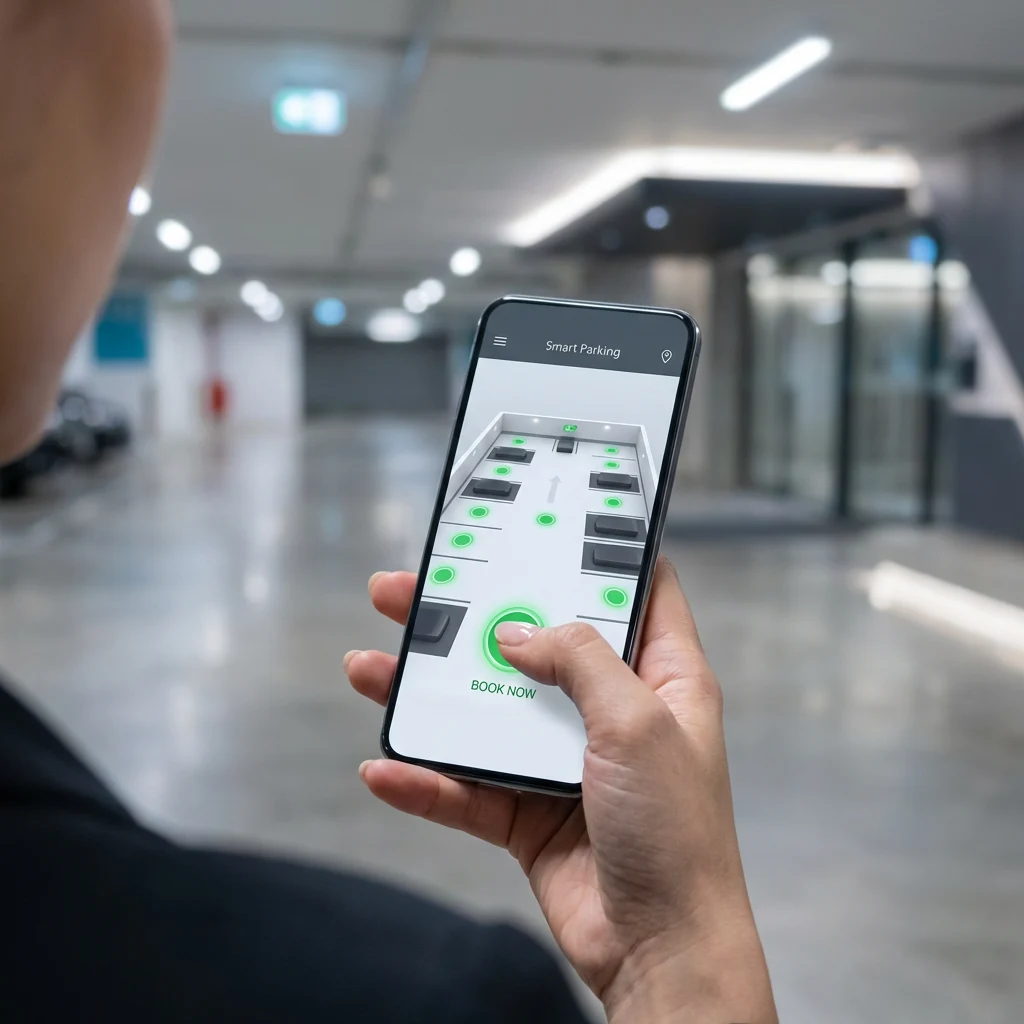
How Does Slot Booking and Allocation Happen?
Users gain predictability. Operators gain better control over space utilization throughout the day.
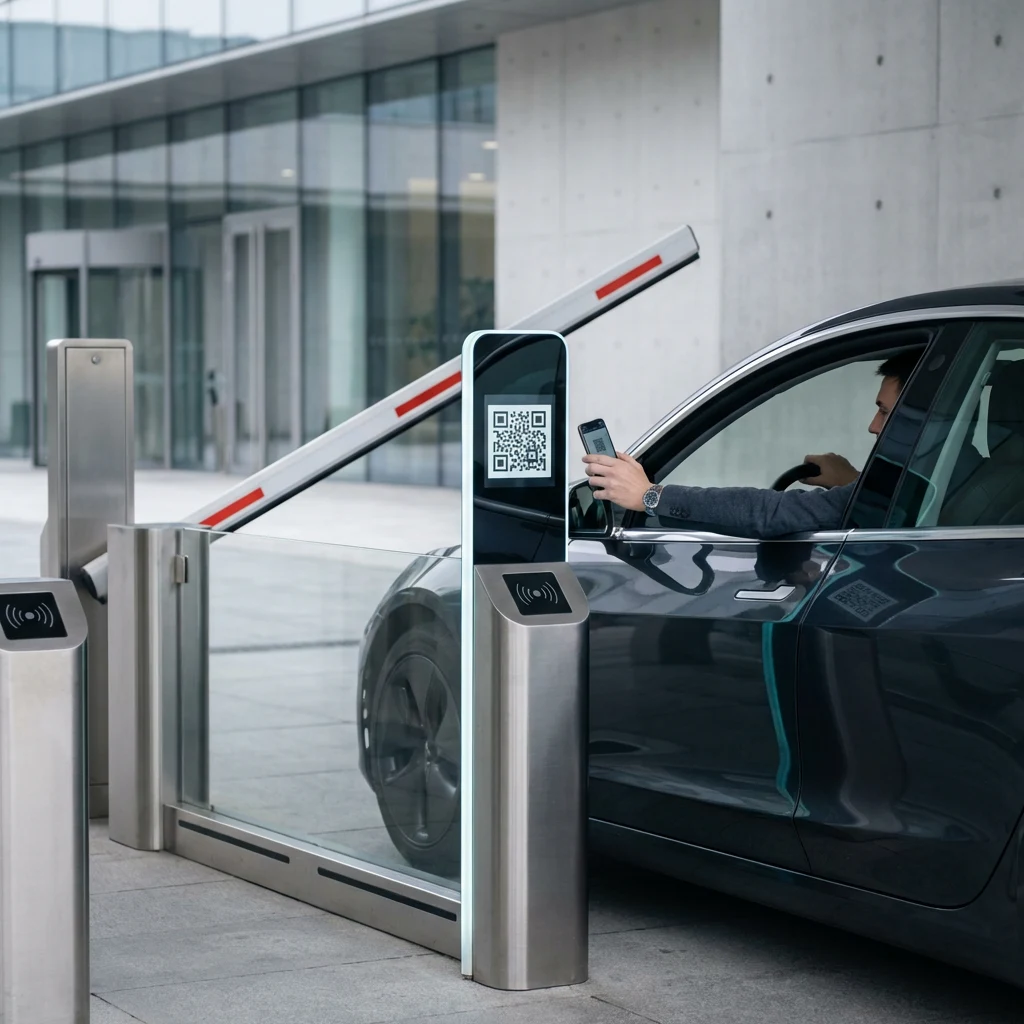
How Does Access Control Work in Smart Parking Technology?
1. QR Code Entry
Scan at the barrier for instant contactless access. No physical cards required.
2. FAS Tag Integration
Vehicles pass through with automatic validation, similar to highway toll systems.
3. RFID Access
Card-based entry for reserved employee parking and restricted zones.
4. Visitor Management
Temporary digital access issued with time-bound permissions and automatic expiry.
How Do Sensors and Indicators Improve Navigation?
1. Green Indicators
Mark available slots clearly from a distance.
2. Red Indicators
Show occupied slots at a glance so drivers move past without stopping.
3. Level-Based Displays
Show total available slots per floor at each level entrance.
4. Directional Signage
Guides vehicles through the most efficient route to an open slot in larger facilities.
According to a study published in Nature Scientific Reports, parking management systems improve parking efficiency, reduce congestion, and enhance space utilization through real-time data and advanced monitoring.
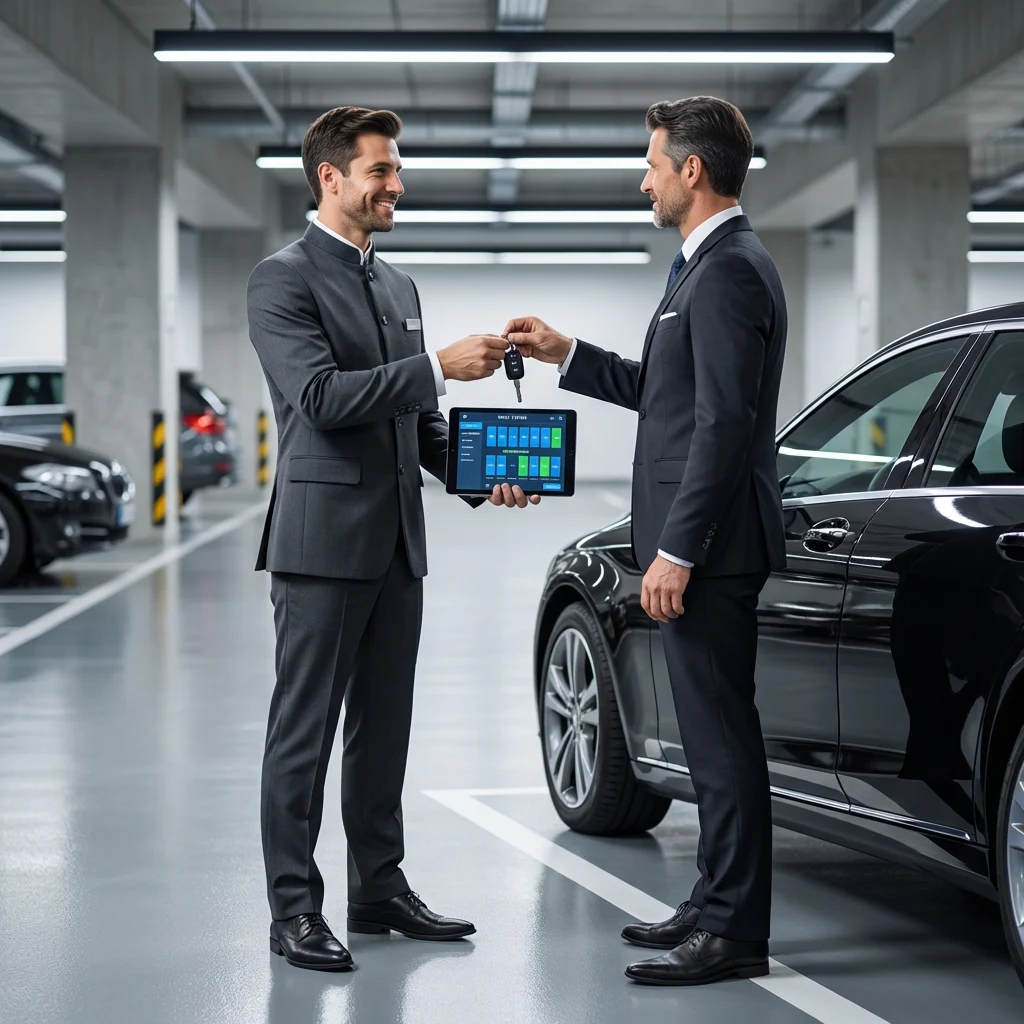
Does Smart Parking Technology Support Valet Parking Management?
Smart parking technology brings the same level of control and visibility to valet parking management. When a vehicle is handed over, the attendant logs it into the system, a slot is assigned automatically, and the exact location is recorded in the dashboard.
When the user requests retrieval, the attendant gets the slot details instantly, reducing fetch time and eliminating dependency on physical tokens or manual records.
Every handover, allocation, and retrieval is tracked in real time, giving facility managers complete oversight of the entire process for valet parking management.
How Does Map View Enhance Parking Visibility?
1. Live Slot Status
2. Pre-Arrival Visibility
3. Slot-Level Detail
4. Overstay Alerts
5. Zone-Level Filtering
6. Historical Usage View
How Does Camera-Based Parking Guidance Work?
The camera-based system has an advantage that there is only one device for several parking spaces, affecting the economics of mass implementation.
The camera itself processes the collected information on edge computing without delay, making the operation of the system effective even at its busiest moments. It means that for management, cameras are a cheaper investment, straightforward to install and maintain.
The camera system operates effectively in open spaces, basements, and buildings.
When used with ultrasonic sensors in high-density areas, the setup allows facilities to grow without having to spend more on hardware.
How Are Payments Managed in Smart Parking Technology?
1. Live Slot Status
Accepted through the app or at exit kiosks. Multiple possibilities, one streamlined experience.
2. QR Payment System
Scan and make payment directly using your mobile phone upon exit or via the application.
3. Kiosk Payment System
Self-service kiosks allow for lightning-fast payment processing without queueing up at the exit point.
4. Automatic Fee Calculation
Fees are automatically calculated using the entry time, slot type, and applicable rates.
5. Electronic Receipts
An electronic invoice is automatically created and sent out after each session for tax and expense purposes.
6. Billing for Multiple Facilities
Businesses with several facilities receive a combined billing report for all locations in a single glance.
How Does Smart Parking Technology Handle Multi-Level Parking?
Multi-level facilities need more than availability data they need structured guidance that works across every floor.
Entry displays show total slot availability across all levels the moment a vehicle approaches. As drivers move through the facility, floor-level indicators and directional displays provide continuous updated guidance. The system distributes load dynamically across floors, preventing concentration on the most accessible level.
Administrators get a consolidated dashboard view of every floor and zone, with the ability to set capacity limits, configure allocation rules, and monitor usage patterns over time.
How Does Smart Parking Technology Support Business Growth?
1. Decreased Congestion
Rapid entry/exit will ensure that internal routes remain unobstructed and minimize vehicle downtime.
2. Enhanced Space Management
Dynamic utilization of space will ensure efficient use of all available spots without congesting certain areas.
3. Operational Efficiency
Detailed usage data can be used to make informed decisions regarding capacity management and price setting.
4. User Satisfaction
A good parking experience translates into a positive perception of the organization managing the parking facility.
5. Operational Savings
Through automation, supervision is minimized as entry, exit, and wayfinding become more automated.
6. Optimizing Revenue
Management through accurate occupancy data and dynamic pricing ensures maximum revenue realization.
According to Technavio, the parking management market size is expected to grow by over USD 1.5 billion between 2023 and 2028, driven by urbanization and the increasing adoption of smart parking technology to improve efficiency and space utilization.
Why Choose Aastro for Smart Parking Technology?
1. End-to-End Implementation
From sensor installation to software go-live, Aastro manages every layer of the deployment.
2. Scalable Architecture
Works for single-building setups and scales to multi-site campuses without a system rebuild.
3. Real-time Monitoring
Real-time data from all slots, floors, and entrances in your building.
4. Integration
The system can integrate with your current building management systems, security systems, and payment systems.
5. Driver and Facility
Staff-friendly Interfaces designed for ease of use by drivers and facility staff alike.
6. Post-Deployment Support
FAQs
1. What is Smart Parking Technology & How It Works?
This advanced parking solution leverages ultrasonic sensors, cameras, automated display units, and digital applications that work together on one platform to coordinate parking management, including vehicle access, navigation, booking, and billing services.
2. What is the Role of Smart Parking Technology in Reducing Congestion?
The advanced parking technology streamlines parking through the use of sensors and other technologies. This way, no unnecessary maneuvering is involved. Also, access control cuts back the waiting lines for both entrances and exits from parking lots.
3. Is Smart Parking Technology Applicable to Multi-Tenant Buildings?
Parking technology allows managing shared parking spaces for multi-tenant buildings. Availability control, allocation based on tenants’ needs, as well as floor-level navigation, make sure that everyone shares the parking lot according to predefined rules.
4. What types of sensors are used in smart parking technology?
Ultrasonic sensors and camera-based systems are the two primary sensor types. Ultrasonic sensors detect slot occupancy in real time. Camera systems monitor multiple slots simultaneously and provide visual data for accurate availability tracking. Both feed continuously into the central management platform.
5. How does smart parking technology support pre-booking of slots?
Users access a live parking map through the mobile app, select an available slot, and confirm the reservation before arriving at the facility. The system holds the slot for a defined window and releases it automatically if unused, keeping availability fair for all users.
6. Is smart parking technology suitable for large parking facilities?
Smart parking technology is built to scale. The system handles high vehicle volumes and complex multi-level layouts without compromising speed or accuracy. Camera-based systems are particularly effective in large facilities, covering more area with fewer devices and reducing overall installation complexity.
7. How does access control function in smart parking technology?
QR code scanning, RFID card reading, and FASTag validation are the primary access methods. Each allows vehicles to enter and exit without manual checks. Every movement is logged automatically, maintaining a complete access record while preventing bottlenecks at entry and exit points.
8. Can smart parking technology integrate with existing payment systems?
Smart parking technology integrates with UPI, debit and credit cards, QR-based platforms, and exit kiosk systems. Payments are accepted through the mobile app, self-service kiosks, or QR codes at barriers. Digital receipts are issued automatically after every session for GST compliance and expense tracking.
9. How does smart parking technology improve user experience?
Drivers arrive knowing exactly where to park, access is contactless, LED indicators provide on-ground guidance, and payment is completed in seconds. Every step of the journey is structured and predictable, which removes the frustration typically associated with unmanaged parking facilities.
10. Why should businesses invest in smart parking technology?
Smart parking technology delivers measurable improvements in space utilization, vehicle throughput, and user satisfaction. Operational data supports better capacity planning and revenue decisions. Over time, the reduction in manual effort combined with improved facility performance delivers a strong and trackable return on investment.pically associated with unmanaged parking facilities.