
Parking Management Software and Data Privacy: What Facility Managers Should Know
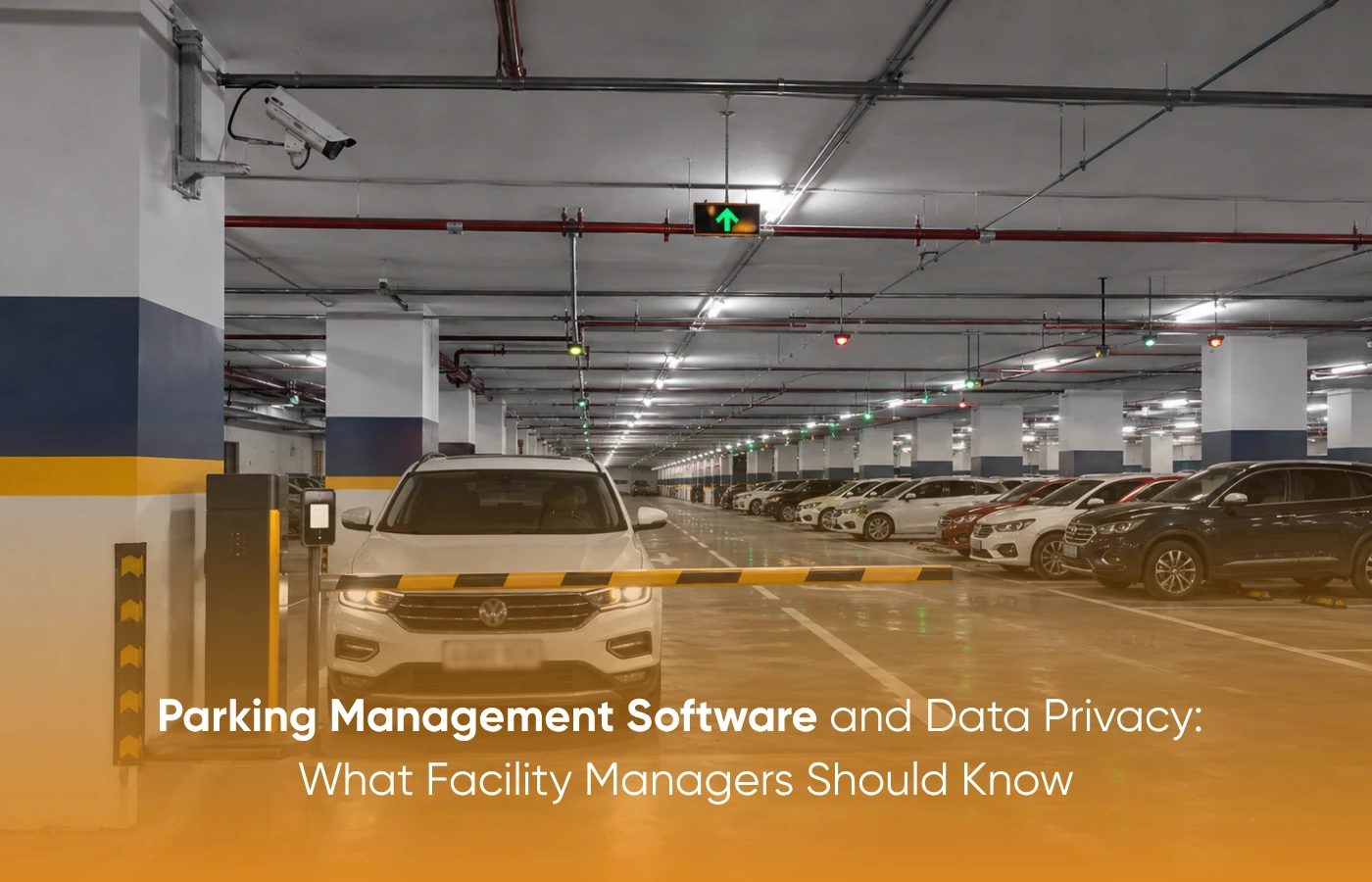
Parking management software can handle different types of information depending on how a facility manages access, occupancy, reservations, cameras, and payments. Facility managers should understand what information enters the system, why the facility needs it, who can access it, and how long it should remain available.
Before implementation, the key areas to review include:
1. Data collection: Identify what information each parking feature captures.
2. Purpose: Confirm why each type of information is needed.
3. Access control: Define which teams or users should have access.
4. Data retention: Set clear rules for how long information should be stored.
Parking technology conversations rarely begin with data privacy.
A facility team is more likely to start with queues at entry points, employees searching for available slots, difficult visitor parking, or limited visibility into space utilization. Parking management software or modern parking management solutions appear to offer a practical way to address these problems.
Then another set of questions emerges. Does the system record number plates? Where are records stored? Can everyone with dashboard access see vehicle history? What information is connected to a parking reservation?
For a commercial facility, those questions need to be part of the technology decision from the beginning.
What Information Can Parking Management Software Handle?
A sensor may simply detect whether a parking space is occupied. A reservation platform needs information that connects a user with a booking. An Automatic Number Plate Recognition, or ANPR, system can capture a vehicle registration mark along with details such as time and location.
For facility managers, it helps to separate the information by purpose.
1. Occupancy data: Sensors can indicate whether individual spaces or parking zones are occupied.
2. Access information: Entry systems can record parking access events based on the technology used.
3. Vehicle information: ANPR-based systems can process vehicle images, number plates, registration marks, and associated information such as date, time, and location.
4. Booking information: A reservation platform may connect a parking space with an employee or authorized user.
5. Payment data: Paid parking can introduce payment-account information and related security requirements.
Understanding these differences makes the privacy discussion much more practical when evaluating a parking management system.
According to BUILDINGS, smart parking technologies used in commercial properties can include vehicle-detection sensors, digital signage, apps, access systems, and ANPR, depending on the facility’s requirements.
Why Does Parking Data Privacy Matter to Facility Managers?
Facility managers often coordinate the operational side of a smart parking project, while several other teams have responsibilities around the technology.
Security may manage access. IT may review networks and system architecture. Finance may become involved when the project includes payment functions. Legal or compliance teams may need to review how identifiable information is processed.
A parking guidance system therefore needs more than a feature checklist.
Consider ANPR. A number plate recorded at an entry point can support a clear access or parking purpose. Repeated records can also create a history showing when the same vehicle arrived at a location.
That changes the conversation from “Can the camera recognize the vehicle?” to “Why do we need this information, who needs access, and when should the record be removed?”
Those are operational questions as much as privacy questions, especially when smart car parking technologies connect access, occupancy, and vehicle data within the same environment.
Does Every Parking System Create the Same Privacy Considerations?
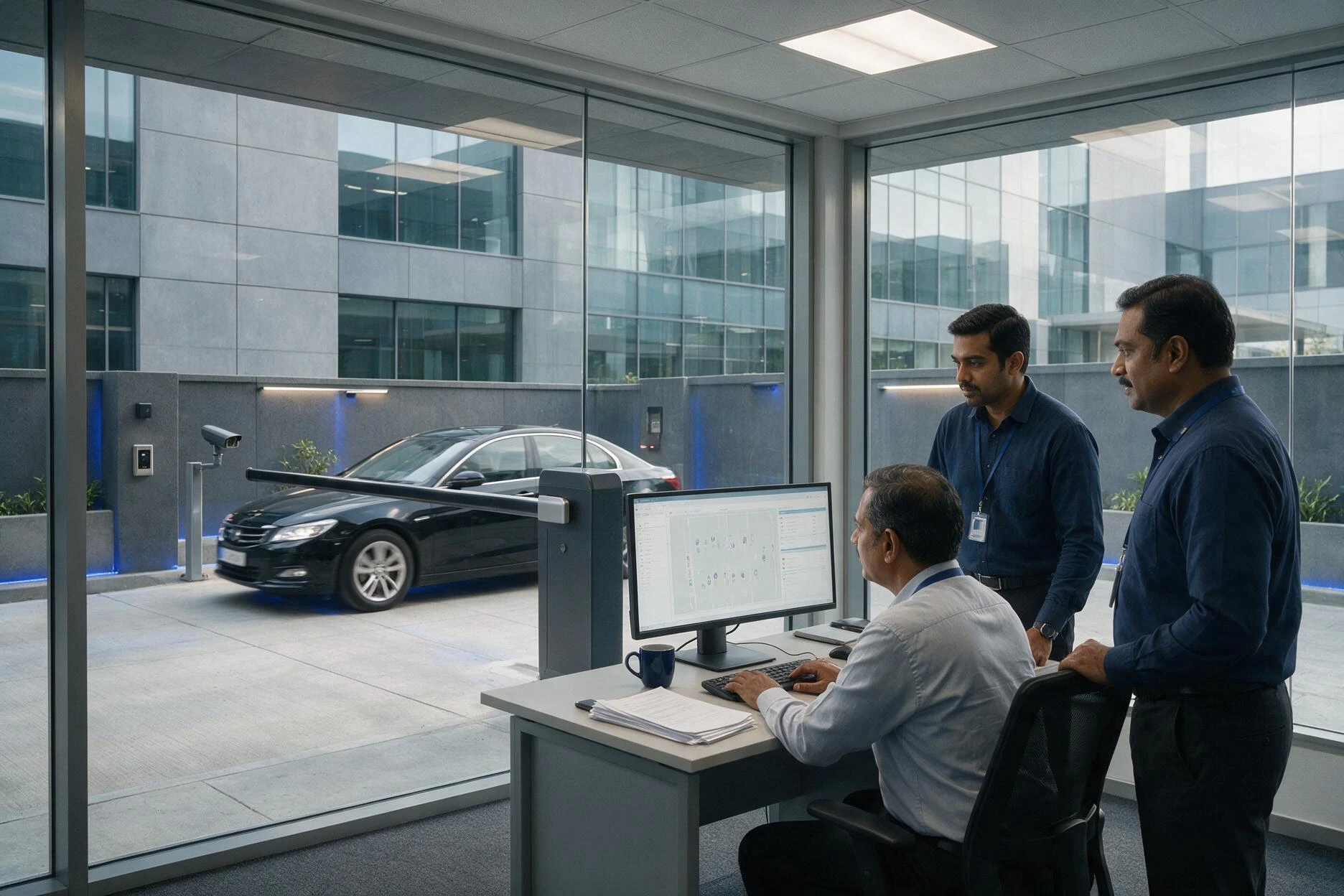
A facility should look at the data behind each feature rather than treating everything as generic “parking data.”
Take three common situations.
1. A parking guidance system may rely on occupancy information to show whether spaces are free.
2. An ANPR-enabled entrance processes a vehicle registration mark to support a defined access or parking function.
3. A paid parking setup may introduce card payment processing.
Each situation has a different data profile and requires a different review.
Where a smart parking uses technologies such as ANPR, access control, or user-linked bookings, facility teams should understand what information each feature collects and how that information is handled.
This is why the discussion about the best parking management software should start with the operational feature and then look at the data required to make that feature work.
What Should Facility Teams Check Before Discussing Compliance?
Facility teams do not need to make legal interpretations themselves. They should give legal, IT, and compliance teams a clear picture of how the proposed system works.
Three areas help organise that discussion.
1. Purpose: Start with a simple question: Why does the facility need this information? If occupancy sensors can solve an availability problem, the facility can assess separately whether identifiable vehicle information is also required.
2. Access: Different users can have different operational needs. A facility manager monitoring space utilisation may require occupancy information. A security team investigating an access event may need a different level of visibility.
3. Retention: Keeping information indefinitely because storage is available creates an unnecessary data-management burden.
Facilities operating across different jurisdictions should confirm the requirements that apply to each deployment. In India, the Digital Personal Data Protection Act, 2023 and the Digital Personal Data Protection Rules, 2025 are being implemented in phases. Facilities should confirm the requirements in force at the time of deployment and how they apply to the data being processed.
In India, the New Delhi Municipal Council’s Smart Parking project covers 87 parking lots with 5,392 four-wheeler and 2,237 two-wheeler spaces. The system is designed to provide real-time parking availability, monitor vehicle entry and exit, optimise parking occupancy, and generate data to understand parking demand and supply.
How Should Parking System Security Be Evaluated?
The review should cover the whole connected parking environment.
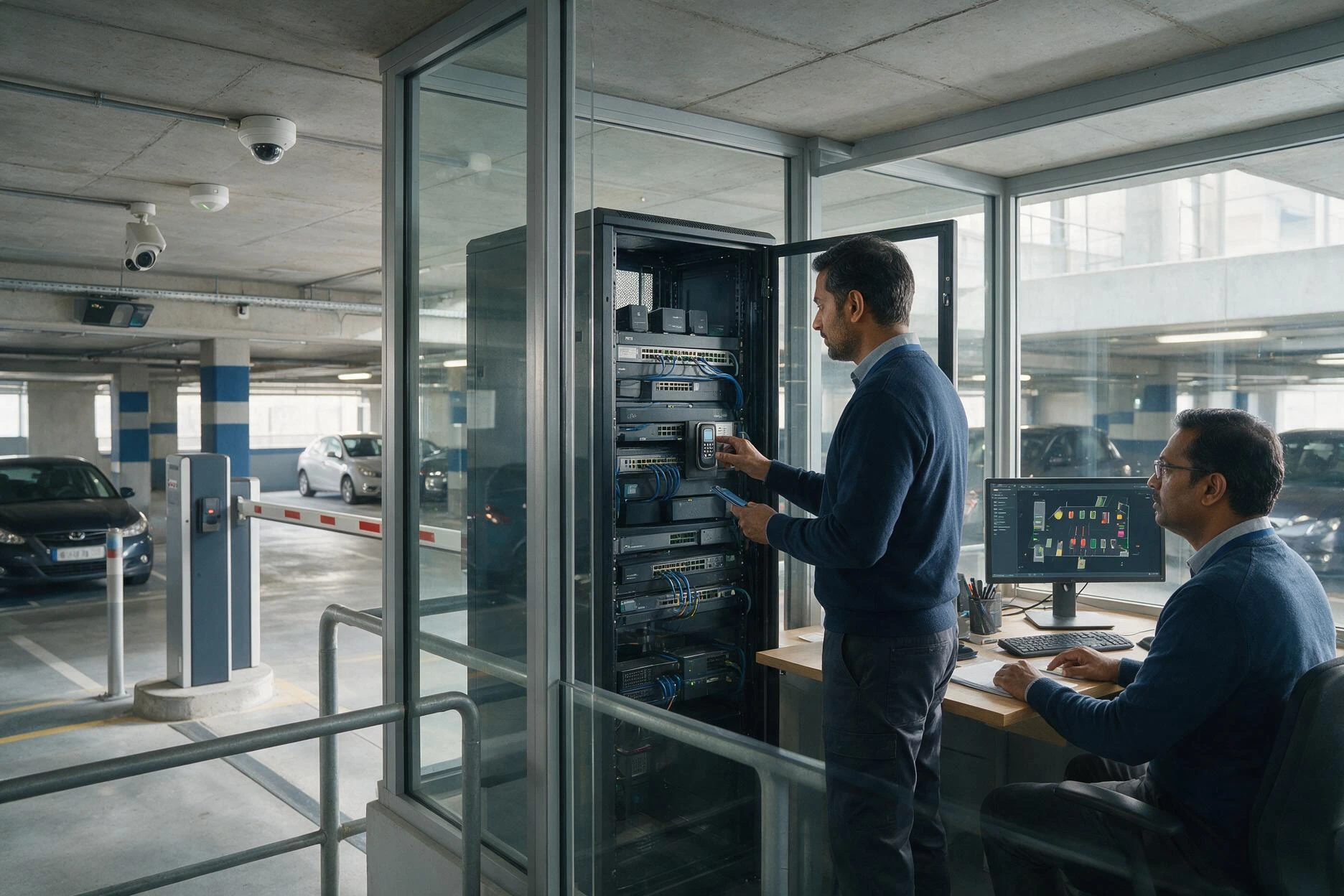
Modern systems can involve sensors, access devices, cameras, applications, gateways, dashboards, and other connected components. Security therefore needs to extend beyond the interface of the parking management software.
Facility and IT teams can check:
1. User permissions: Which information can each role view or change?
2. Connected devices: How are sensors, cameras, gateways, and access devices configured and maintained?
3. Data flow: Where does information travel after a device collects it?
4. Updates: How are software and connected devices updated?
5. Vendor access: When can external support teams access the platform, and what controls apply?
These questions help the organization understand the system before deployment rather than discovering access or support arrangements later. They also help teams evaluate whether the proposed parking management services include the operational and technical support required after installation.
What Should Facility Managers Look Beyond During a Product Demo?
A product demonstration naturally focuses on visible features. Real-time occupancy, parking reservations, guidance displays, and entry management are easier to demonstrate than data governance.
Facility managers should use the evaluation stage to look one level deeper.
1. Follow the information behind the feature: If a dashboard shows available spaces, ask what produces that information and what gets stored.
2. Check permissions in practice: Ask whether access can be separated for facilities, security, administrators, and other users.
3. Understand the exception process: Find out what happens when a camera, sensor, access device, or platform connection fails. Ask how support and escalation are handled.
4. Confirm retention options: Where the system stores identifiable information, understand whether retention can be configured around the organisation’s requirements.
A parking management software provider should be able to explain how these areas work within the proposed deployment.
How Much Parking Data Should a Facility Retain?
The useful answer is based on purpose rather than a universal number of days.
Occupancy trends used for capacity planning serve a different purpose from identifiable entry records. Security footage may follow another retention policy. Payment-related information can have separate regulatory or contractual requirements. One retention rule across every data category may therefore be inappropriate.
Facility teams should establish why each category is being retained and involve the relevant internal stakeholders in deciding how long the requirement continues.
This also makes the parking management software easier to govern as the deployment expands to additional buildings or sites.
How Does AastroTech Support Parking Management?
AastroTech Electronics offers parking management solutions for commercial environments, including:
1. QR-based access: Supports reserved parking entry and exit.
2. App-based booking: Helps employees view and reserve parking spaces.
3. Parking guidance: Uses sensors and digital displays to direct vehicles to available bays.
4. Occupancy monitoring: Provides facility teams with better visibility into parking availability and utilisation.
These capabilities can support different smart car parking requirements. Confirm data hosting, permissions, retention, cybersecurity, privacy controls, and integrations based on the proposed deployment.
How Much Parking Data Should a Facility Retain?
Start with the parking problem rather than the technology. Define what needs to improve, identify the right feature, and understand the information required to support that feature.
Facility teams can then involve IT, security, finance, or compliance as needed and review access, storage, retention, and security before deployment.
This keeps parking management software focused on solving real operational needs while ensuring parking data is managed responsibly within the parking management system.
Looking to improve parking operations with the right technology?
Talk to AastroTech to explore a parking management solution suited to your facility.
FAQs:
1. Does parking management software always collect personal data?
No. Parking management software can use different technologies. Occupancy sensors may only indicate whether a space is occupied, while ANPR systems can process vehicle registration information that may be personal data depending on the context and purpose of processing.
2. Is a vehicle registration number considered personal data?
The UK ICO states that a vehicle registration mark is personal data in most circumstances, although this depends on the processing context. Facilities operating elsewhere should review the privacy requirements applicable in their jurisdiction.
3. Does PCI DSS apply to paid parking systems?
PCI DSS is relevant to environments where payment account data is stored, processed, or transmitted, as well as to entities that can affect the security of those environments. The exact scope depends on how the parking payment system is designed.
4. How long should parking management software retain vehicle information?
There is no universal retention period for every parking system. Retention should reflect the purpose for collecting the information, as well as applicable legal, contractual, security, and organisational requirements. ANPR guidance from the ICO recommends deleting data once the defined need ends.
5. How can parking management improve workplace parking operations?
A parking management system can help facility teams monitor availability, manage reservations, understand occupancy patterns, and improve how existing parking spaces are allocated and used.
6. What technologies can be used in a parking management system?
Parking systems can combine occupancy sensors, reservation platforms, QR-based access, digital signage, parking guidance, cameras, and other connected technologies depending on the facility’s requirements.
7. What should facility managers look for in a parking management solution?
Facility managers should consider parking capacity, booking requirements, access control, real-time occupancy visibility, guidance systems, reporting, integration with existing systems, and ease of management.
8. What parking solutions does AastroTech offer?
AastroTech offers parking management capabilities including QR-based access control, employee parking reservations through an application, parking-layout visibility, ultrasonic sensor-based guidance, digital signage, and occupancy monitoring.
9. Can AastroTech help manage parking availability?
Yes. Aastro Tech offers parking solutions that help facility teams monitor space availability and manage parking operations across commercial facilities more efficiently.
10. Can AastroTech support employee parking booking?
Yes. AastroTech’s workspace management offering includes app-based parking booking, allowing employees to view parking layouts and reserve available spaces based on facility requirements.