

How Can Lighting Control Sensor Improves 4 Areas of LEED Certification?
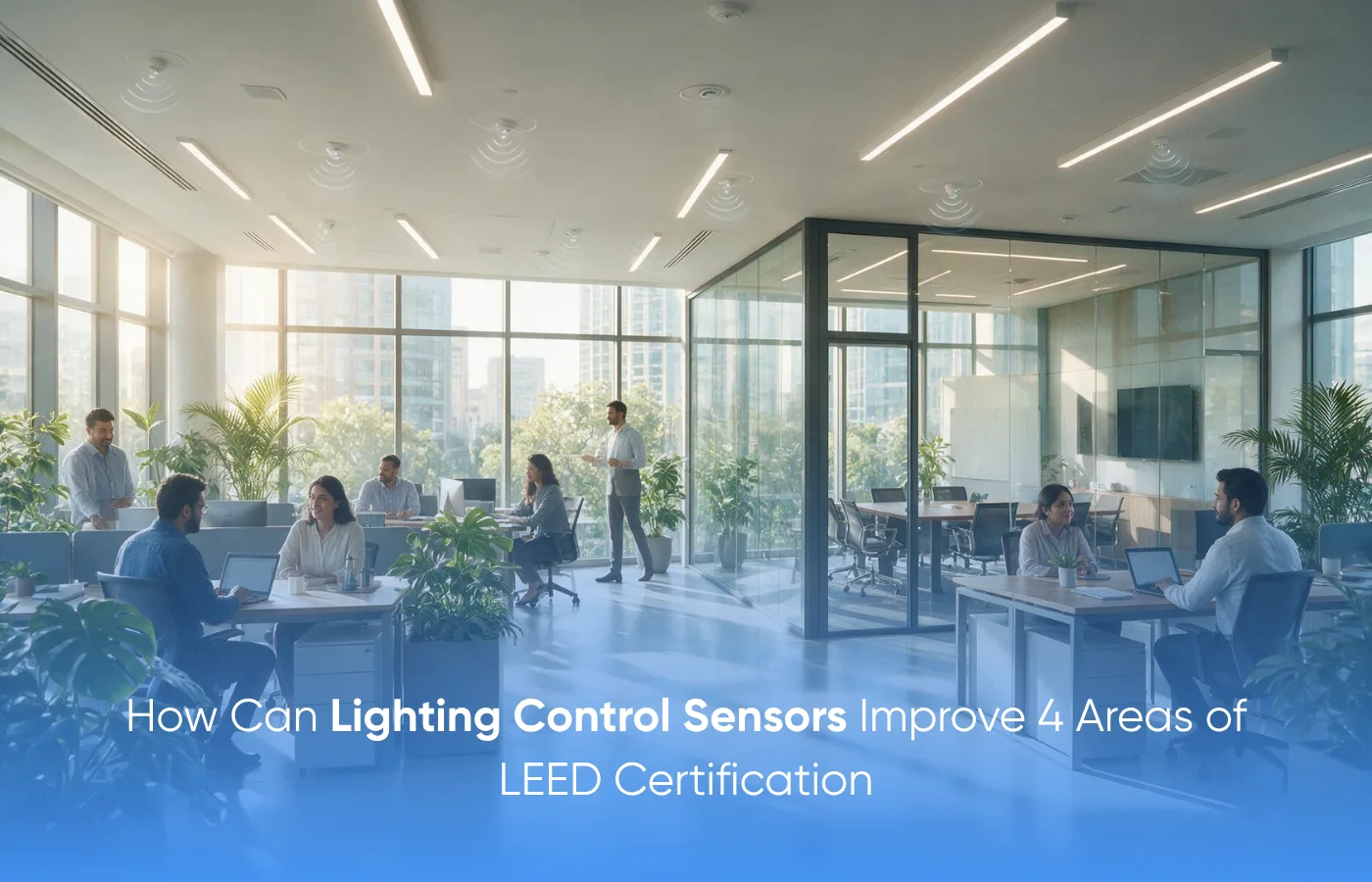
A lighting control sensor helps commercial buildings use lighting more efficiently by switching lights off in unoccupied spaces and adjusting brightness based on available daylight. This can support LEED certification by reducing energy consumption and contributing to relevant sustainability credits.
Quick facts:
1. Lighting Control Sensors reduce unnecessary energy consumption by detecting occupancy and daylight levels.
2. LEED certification rewards buildings that install automated lighting controls under multiple credit categories.
3. A connected lighting control sensor creates verifiable energy reports for auditors.
4. Circadian lighting for offices, supported by the same sensor network, adds points under Indoor Environmental Quality.
What is LEED Certification and Why It’s Important?
Leadership in Energy and Environmental Design (LEED) is the world-renowned green building certification program created by the U.S. Green Building Council, which assigns a rating based on how well a building performs in energy consumption, water efficiency, indoor air quality, material selection, and more. At its core, LEED exists to reduce a building’s environmental footprint. Roughly a third of global emissions trace back to how buildings are built and operated, which is exactly the impact LEED was designed to measure and reduce. For building owners, LEED certification carries weight beyond an environmental badge:
1. Lower operating costs: The LEED building is generally more energy-efficient and uses less water, thereby reducing overall utility bills.
2. Increased property value: LEED-certified buildings have higher market value because they deliver proven environmental results, not just claims.
3. Tenant interest: As businesses become more concerned about environmental issues and sustainability, getting a LEED certificate makes you stand out from the competition.
4. Government incentives: Some cities and states offer tax rebates to LEED-certified buildings for cutting their environmental impact.
5. Proven measure: Compared to self-reporting for sustainable development practices, LEED ensures that there are measurable environmental results based on real data, and building systems play their role here.
This is where automated systems earn their place in the certification process. LEED assessors do not award points for intentions. They award points for evidence, and that is exactly what a lighting control sensor is built to provide.
What is a Lighting Control Sensor and Why Does LEED Care About It?
The Lighting Control Sensor is a device designed to detect occupancy and/or ambient light and automatically regulate lighting accordingly. LEED cares about this because lighting accounts for a significant share of a building’s total energy draw, and every kilowatt-hour saved is a kilowatt-hour of emissions that never gets generated. The rating system values quantifiable energy savings precisely because they translate directly into a smaller environmental footprint, not just a smaller utility bill.
This is how the equipment performs in the building:
1. Occupancy sensing: Turns off the lights within seconds of the room, hallway, washroom, etc. becoming unoccupied, after detecting no activity.
2. Daylight harvesting: Adjusts artificial lighting when natural light is sufficient.
3. Scheduling capabilities: Works with the lighting control system, using different settings for workdays, weekends, and holidays.
4. Logging of the collected data: Facility staff use this data directly for LEED submissions, without running manual calculations.
A Berkeley Lab meta-analysis on lighting controls reviewed 240 savings estimates and found average energy savings of 24% from occupancy controls, 28% from daylighting, and 38% from combined control strategies.
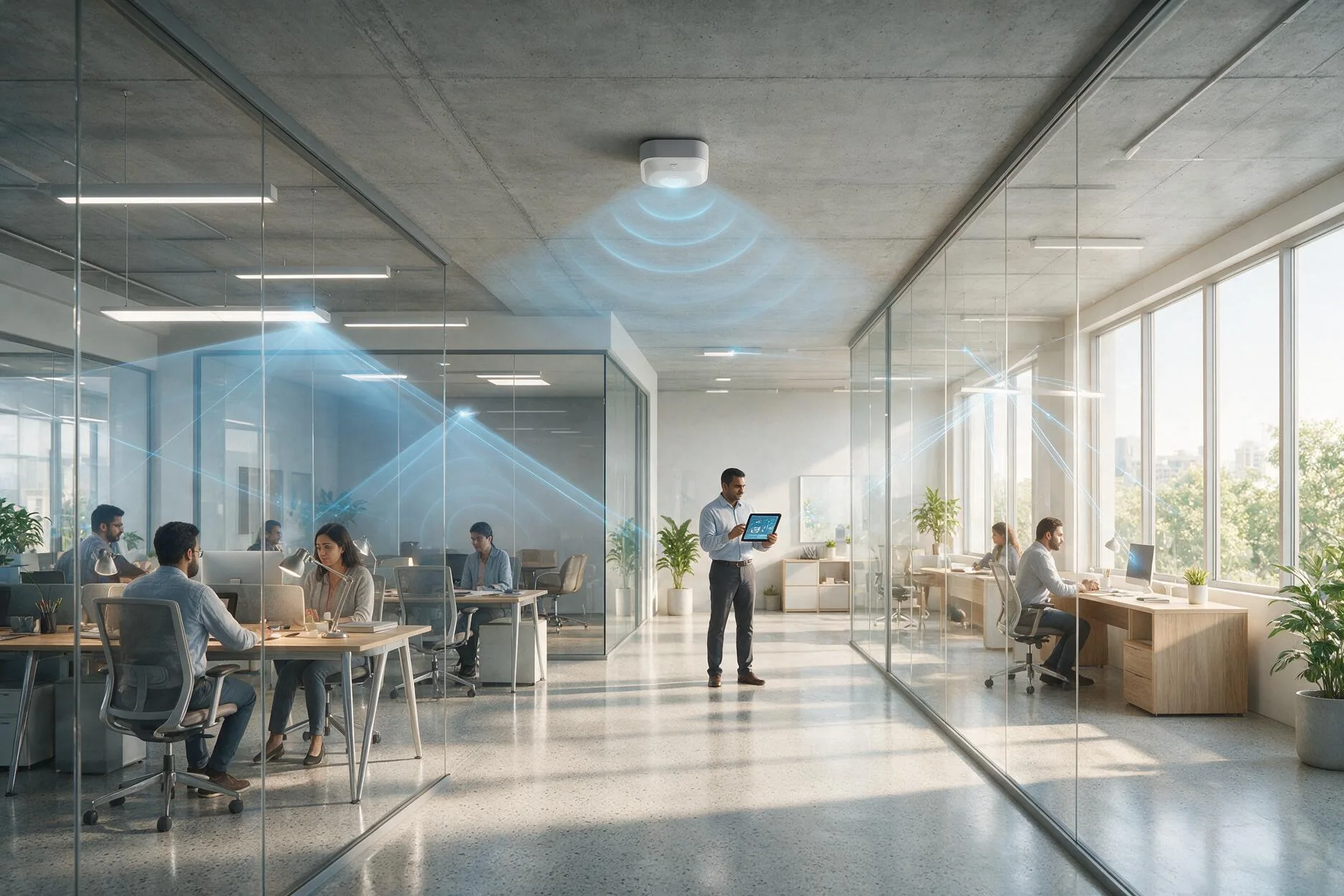
How Does a Lighting Control Sensor Support a Building’s Broader Sustainability Goals
LEED certification recognizes buildings that reduce energy use and environmental impact. Lighting control sensors contribute by improving day-to-day energy efficiency across the building.
1. Electricity demand: Lighting is a bigger piece of the climate math than most building owners realize.
The International Energy Agency estimates that lighting in buildings and outdoor applications accounted for around 8% of global electricity demand in 2024, close to 2,200 terawatt hours. Every watt a sensor prevents from being drawn unnecessarily is a watt that doesn’t have to be generated, transmitted, or accounted for in a building’s carbon disclosures.
2. Material and resource conservation: The environmental case goes beyond electricity. Lighting control sensors extend the working life of fixtures and lamps by reducing runtime hours, which cuts down on how often materials need to be manufactured, shipped, and replaced.
3. ESG and net-zero reporting: For building owners tracking Scope 2 emissions or reporting against corporate net-zero commitments, a lighting control sensor produces exactly the kind of granular, verifiable reduction data those disclosures require, the same data LEED assessors ask for, just pointed at a different audience.
Certification is the immediate goal. A smaller, better-documented environmental footprint is the actual outcome.
Which LEED Credits Reward Lighting Control Sensor Installation?
There are several LEED credits awarded for this type of installation, and one would need to compare the project against all of them.
1. Energy & Atmosphere Credit: Optimize Energy Performance awards lighting power reduction achieved through automated controls rather than dimming.
2. EA Credit: Advanced Energy Metering requires real-time data collection, which a networked lighting control system delivers by default.
3. EQ Credit: Daylight rewards daylight-responsive sensors that adjust artificial light based on natural sunlight levels in regularly occupied spaces.
4. EQ Credit: Interior Lighting rewards systems that enable occupants to control their lighting environment through sensor-linked dimming.
Projects that aim to earn more than one credit will find that a strategically planned sensor system can help earn multiple credits simultaneously. This is why owners consider lighting control systems important infrastructure.
How Does Lighting Control Sensor for Offices Fit Into This Certification Path?
Circadian lighting for offices, supported by the same sensor network, adds points under Indoor Environmental Quality, as LEED recognizes lighting that supports healthier, more alert occupants by aligning with natural lighting cycles.
Below is how this relationship works:
1. Adjustment of color temperature: Sensors working with tunable lighting fixtures gradually change light color from cool to warm depending on time of day.
2. Dimming based on daylight: The sensor used in an energy-saving lighting control system also serves to regulate circadian rhythm by synchronizing indoor lighting with outdoor conditions.
3. Occupant health measures: LEED places greater emphasis on health-oriented design; circadian lighting in office spaces is one of the best ways to achieve this objective, without a separate environmental trade-off.
4. Employee productivity: Buildings using circadian lighting tend to have higher levels of focus from their employees, which the owners can use when trying to lease their space.
LEED researchers who study energy credits related to daylight harvesting often encounter the concept of circadian lighting. It becomes easier to justify when people understand that a single set of sensors works for both energy credits and occupant health credits.
A ScienceDirect research study, “Lighting energy savings in offices using different control systems,” found that daylight-based lighting control can deliver 45% to 61% energy savings in office rooms.

What Should Facility Teams Check Before Choosing a Lighting Control Sensor?
Facility teams should check accuracy, integration compatibility, and reporting capabilities before choosing a sensor, since a poor fit here can create documentation gaps during LEED review.
1. Detection range and accuracy: Confirm full-room coverage without dead zones that leave lights on unnecessarily.
2. Integration with existing systems: Check whether the sensor connects cleanly with the current lighting management system or requires a full replacement.
3. Reporting format: Check whether usage data is exported in a format acceptable for LEED assessment, without the need to manually convert it, since that takes a lot of time.
4. Scalability throughout the building: If sensors perform well on a one-floor trial basis, there will be no significant problems scaling up to the entire property.
5. This is the point when facility managers start considering different vendors. At this stage, they know all the requirements for LEED certification and need a qualified installer for the system.
How Does AastroTech Help Buildings Achieve LEED Certification?
AastroTech Electronics designs lighting management solutions built around building certification requirements like LEED and RESET Air. AastroTech’s sensor-based lighting management systems combine occupancy detection, daylight harvesting, and circadian lighting for offices into one connected lighting management system.
What sets AastroTech apart is the documentation layer. Each lighting control sensor installation feeds performance data into dashboards, making it easier for facility teams to organise and present relevant documentation during the LEED assessment process. AastroTech also supports buildings pursuing DLC listing, so lighting upgrades serve multiple certification goals at once.
For building owners pursuing sustainability targets and healthier workspaces, AastroTech provides connected lighting control solutions that support energy efficiency, performance tracking, and certification goals.
Conclusion
The LEED certification process favors building owners who can demonstrate, rather than state, their energy performance capabilities. By using a lighting control sensor, facility managers can provide evidence through occupancy data, daylight harvesting data, and even circadian lighting analysis, which will be favoured by assessors. For the building owner making the right investments now, there will be savings and certifications in the future.
Make your building performance measurable, efficient, and LEED-ready with AastroTech.
FAQs:
1. Does a lighting control sensor really make a measurable difference in LEED scoring?
Yes, it directly supports Energy and Atmosphere credits by documenting reduced lighting power use and the lower emissions that come with it. Assessors weigh this category heavily, so verified sensor data often determines whether a commercial building earns a lower or higher LEED certification tier.
2. Can existing buildings be retrofitted with a lighting control sensor without major construction?
Most modern systems install with minimal disruption, using existing wiring and wireless connectivity. Facility teams typically complete retrofits floor by floor, allowing operations to continue while the lighting management system upgrade rolls out gradually.
3. How does office circadian lighting influence employee productivity?
Office circadian lighting adjusts colour temperature in response to changes in the light cycle, ensuring high productivity throughout the day and an easy wind-down. Well-planned circadian lighting may support visual comfort, alertness, and a more comfortable working environment throughout the day.
4. Is a lighting control sensor beneficial beyond LEED certification purposes?
Yes, it is. This equipment helps reduce electricity costs and the emissions tied to them, increase the life expectancy of light fixtures, and meet various requirements, such as RESET or DLC listing.
5. Can lighting control sensors help reduce energy consumption?
Yes. Lighting control sensors can help reduce unnecessary energy use by switching or dimming lights based on occupancy, daylight levels, and actual space usage. The savings depend on the building layout, operating hours, and existing lighting system.
6. Can a lighting control sensor be used to gain tax incentives?
In most places, local or federal tax benefits and incentives may be available for energy-saving improvements associated with LEED certification. The facility team is advised to check whether their installation qualifies for tax incentives, as sensor-based lighting upgrades are usually eligible.
7. How long will it take to install a lighting control sensor in a building?
Installation periods will vary depending on the building’s size and wiring. Usually, a retrofitting process takes no more than a few weeks if performed gradually on a per-floor basis. Facility managers can continue operations as usual because sensor installation usually involves no major construction works.
8. Are lighting control sensors going to require any maintenance after installation?
Generally, lighting control sensors require minimal maintenance beyond recalibrations and firmware updates through the management system. When using AastroTech sensors, facility teams can use the remote monitoring feature to detect faulty sensors in a timely manner.
9. Does a lighting control sensor actually reduce a building's carbon footprint, or does it just help with LEED scoring?
Both. The same occupancy and daylight data that earns LEED credits also lowers real electricity draw and emissions. It’s not paperwork dressed up as sustainability, the energy reduction is genuine and measurable, independent of certification.
10. Can lighting control sensors be installed in both new and existing buildings?
Yes. Lighting control sensors can be installed in both new construction and existing commercial buildings, making them a practical option for improving energy efficiency without major structural changes.
