
How Does Smart Washroom Management Improve Washroom Operations?
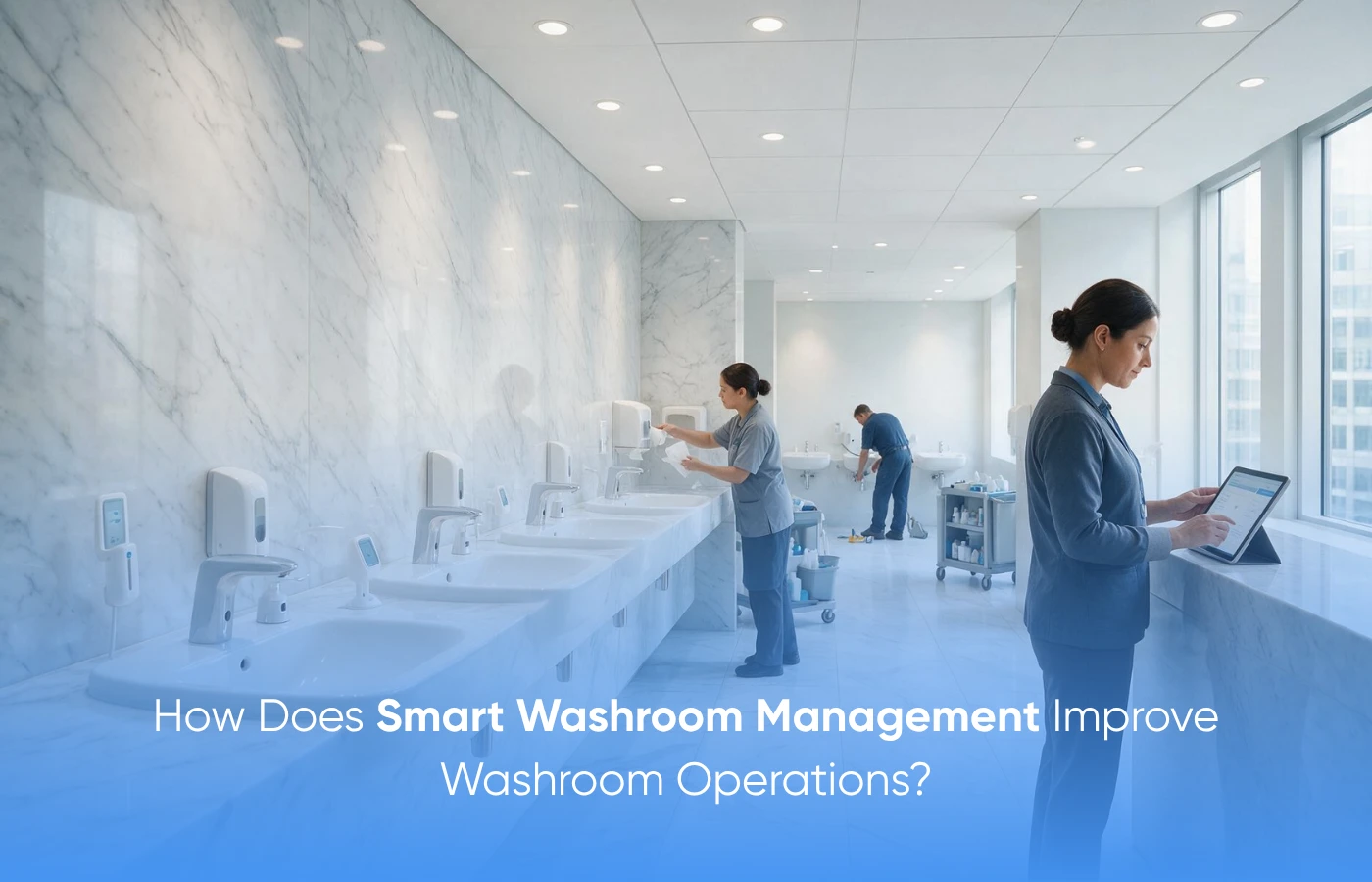
Smart washroom management gives facility teams real-time visibility into washroom usage, supply levels, cleaning needs, Air quality (AQI) and maintenance issues. This lets teams plan resources based on actual demand rather than fixed routines.
Key benefits include:
1. Cleaning schedules built around actual usage patterns
2. Faster detection of leaks, odour, and service needs
3. Better allocation of housekeeping staff
4. Central monitoring across multiple washroom locations
5. Health and safety
In large commercial facilities, washrooms carry recurring costs across cleaning, supplies, manpower, and maintenance. Yet facility teams often have limited insight into how these resources are actually consumed AastroTech’s smart washroom management approach tracks occupancy, supply levels, cleaning needs, and maintenance alerts in real time, giving facility managers the data to run washrooms as a measurable part of facility operations rather than a routine afterthought.
Why Are Facility Managers Looking Closely at Smart Washroom Management?
Fixed cleaning and restocking schedules start to break down once usage patterns shift across a large facility. Peak hours, uneven traffic between floors, and inconsistent supply needs make routine schedules harder to sustain.
1. Cleaning requirements: Usage patterns show facility teams which washrooms need attention more often.
2. Supply management: Level monitoring shows when soap, tissue, and other items need restocking, based on how quickly they’re actually being used.
3. Maintenance visibility: Alerts flag leaks, odour, and other service issues before they escalate.
4. Staff allocation: Usage trends help supervisors assign housekeeping staff to the locations that need it most.
This shift gives facility managers a clearer basis for day-to-day washroom decisions than a fixed calendar ever could.
What Should a Facility Manager Measure Before Selecting a System?
Start by identifying the operational gaps in washroom management that need better visibility. Installing sensors without a defined purpose adds complexity without adding value. Every monitored parameter should feed a decision that housekeeping, maintenance, procurement, or facility leadership actually needs to make.
Common monitoring parameters include:
1. Occupancy and usage volume
2. Odour levels
3. Temperature and humidity
4. Water leakage
5. Cleaning or service alerts
The right combination depends on the site. A corporate office may prioritize usage tracking and supply levels. A large public facility may need broader monitoring across cleanliness, environmental conditions, and service response.
This upfront assessment gives smart washroom management a clear operational purpose and helps teams identify which specific tools suit the site, rather than adopting a generic package.
How Does Smart Washroom Management Improve Staff Allocation?
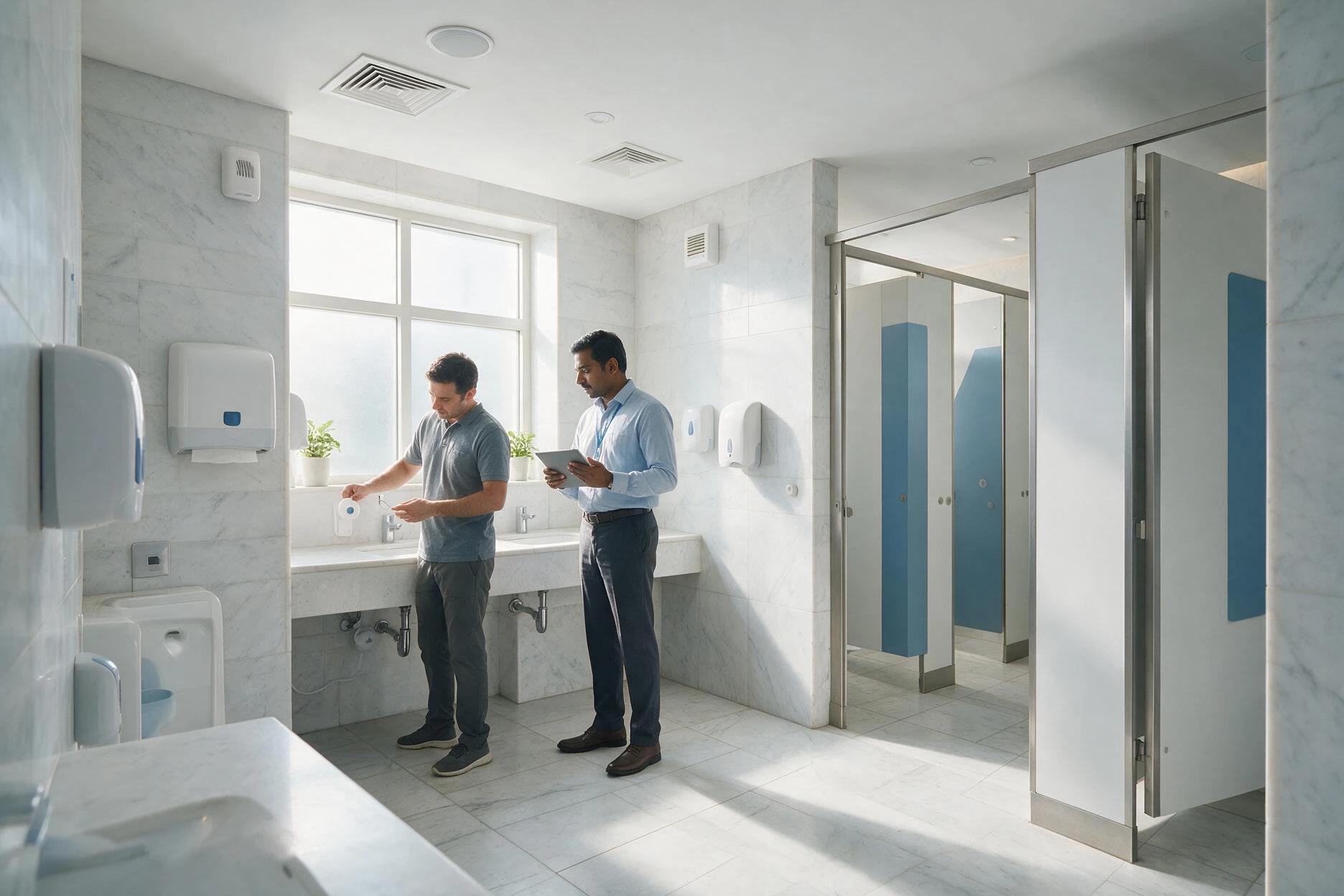
Facility teams typically run on planned schedules because large facilities need predictable routines. Usage data adds a second layer on top of that baseline, showing supervisors where and when demand actually rises.
1. Traffic hotspots: Supervisors can identify which locations see heavier use and plan coverage accordingly.
2. Service priorities: Alerts flag which washroom needs immediate attention, cutting down on repeated manual walk-throughs.
3. Shift planning: Historical patterns reveal recurring peaks around office arrivals, lunch hours, shift changes, or events.
The goal is sharper allocation of the staff already on hand. Supervisors can see where workloads concentrate and adjust coverage to match real conditions instead of a fixed schedule.
How Does Smart Washroom Management Support Maintenance Decisions?
Maintenance teams depend on timely information. A minor washroom issue can quickly become disruptive if maintenance discovers it late.
Water leakage is a straightforward example. A sensor flags leakage the moment it crosses a set threshold, so maintenance can inspect the location before it becomes a bigger repair. Odour monitoring works on the same principle, triggering an inspection once readings move past configured levels.
This shifts maintenance response from reactive to proactive. Teams act on flagged conditions instead of waiting for a complaint or the next scheduled walkthrough. A connected smart washroom system brings these alerts into one structured process instead of scattering them across informal channels.
What Should Decision-Makers Check Before Approving a System?
Technology should solve a defined operational problem, not just add a dashboard.
Before approving a rollout, facility leaders should understand how the system fits within existing housekeeping and maintenance workflows.
A practical evaluation should cover:
1. Which parameters actually need monitoring
2. How sensors communicate with the platform
3. Who receives alerts, and how
4. How usable the dashboard is for facility teams day to day
5. Whether multiple washrooms or sites can be viewed centrally
6. How historical data gets reviewed and reported
7. What support is available during installation and configuration
8. Which metrics will define success
A pilot deployment at one site or floor helps teams test the system under real conditions. It also shows whether the proposed setup matches the facility’s operating needs before a full rollout.
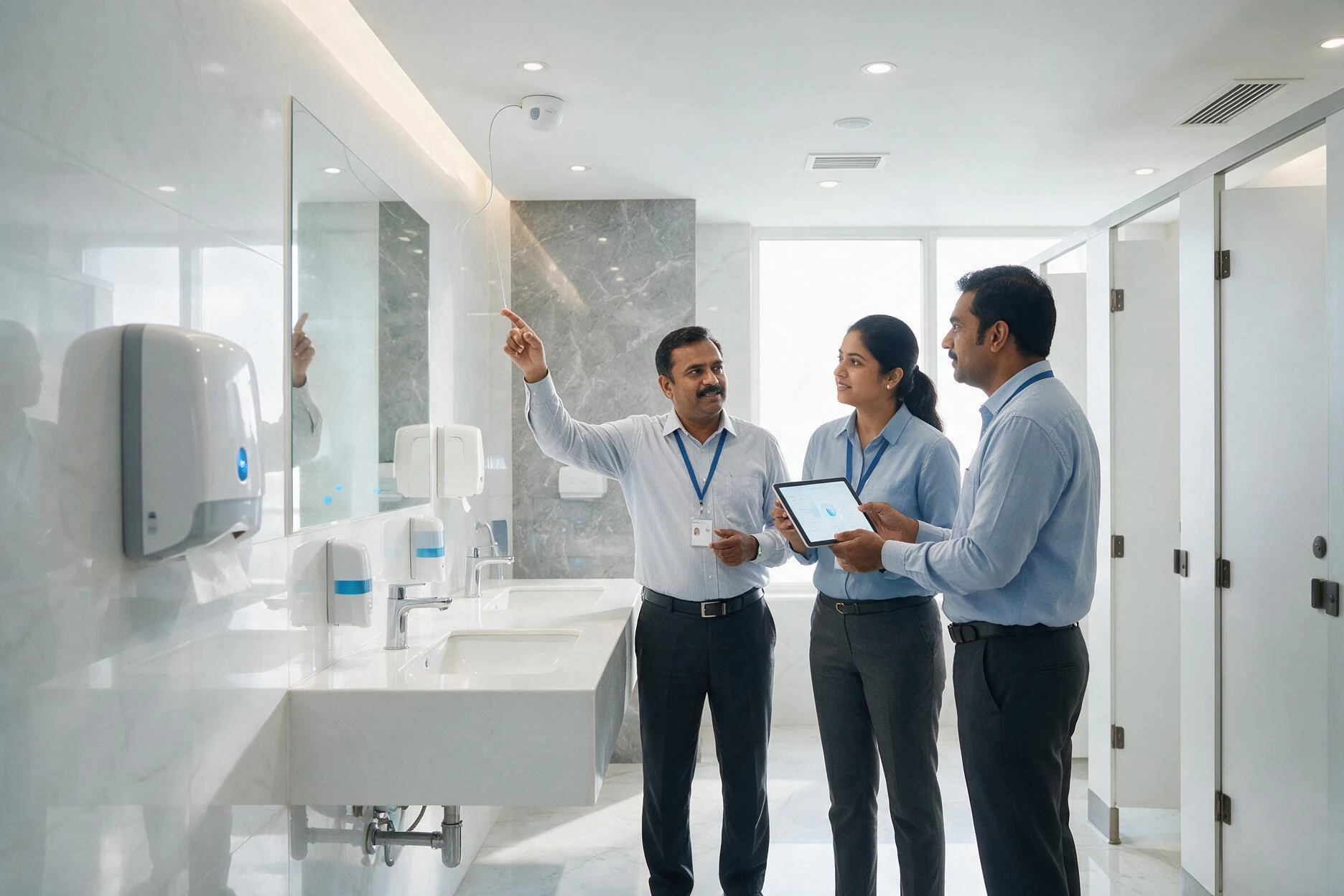
Can Smart Washroom Management solutions Support Sustainability Goals?
Sustainability outcomes depend on what facility teams do with the data, not just on having sensors in place. Three areas carry the most weight in the washroom monitoring system.
1. Water conservation: Early leak alerts let maintenance teams fix issues before wastage builds up.
2. Supply efficiency: Consumption tracking cuts down on over-ordering and reduces waste tied to guesswork-based restocking.
3. Usage-based cleaning: Aligning cleaning frequency with actual demand, instead of a fixed calendar, reduces unnecessary chemical and water use.
4. Long-term resource planning: Historical trends help facility teams forecast staffing and supply needs more accurately across seasons and events.
5. Centralized performance tracking: Consolidated data lets managers fold washroom efficiency into broader facility sustainability reporting.
Results vary by building conditions, existing operating practices, and how consistently teams act on the data available to them.
How Does AastroTech Approach Smart Washroom Management?
Beyond day-to-day monitoring, AastroTech Electronics platform gives facility leaders a structured record of what’s happening across washrooms and how teams respond, useful both for daily oversight and periodic performance reviews.
1. Issue history: Review which locations report recurring operational concerns over time.
2. Response tracking: See when an alert was raised against when action followed, turning response time into a measurable figure rather than a guess.
3. Site and floor comparison: Compare usage, service demand, and recurring issues across floors, buildings, or facilities to spot patterns a single-site view would miss.
4. Resource concentration: Identify where housekeeping and maintenance effort is going, and whether that matches where demand actually sits.
5. Management reviews: Use recorded data, not anecdotal updates, as the basis for internal performance discussions and vendor accountability.
Together, these give facility leaders a consistent way to judge whether the system, and the operation behind it, is actually improving over time.
Conclusion
Washrooms shape facility costs, housekeeping workloads, supply needs, maintenance activity, and employee experience.
Smart washroom management solutions gives decision-makers sharper visibility into each of these areas. A successful deployment starts with a genuine operational need: teams identify the problem, select relevant monitoring parameters, connect alerts to existing workflows, and track results over time.
That process turns washroom management into a measurable part of facility operations, rather than a line item that only gets attention during periodic reviews.
Ready to improve washroom operations with better visibility and control?
Talk to Aastro Tech to explore the right washroom monitoring solutions for your facility.
FAQs:
1. What is smart washroom management?
Smart washroom management solutions uses connected sensors, alerts, gateways, and dashboards to monitor washroom conditions. Facility teams use this data to manage cleaning schedules, supply restocking, maintenance needs, and service activity more effectively than fixed routines allow.
2. How does smart washroom management help facility managers?
It gives managers real-time visibility into usage, supplies, environmental conditions, and service needs. Managers use this to prioritise tasks, plan staffing, spot recurring patterns, and improve coordination between housekeeping and maintenance teams across a facility.
3. Can smart washroom management help control operating costs?
Yes, through better staff allocation, supply planning, and maintenance visibility. Actual savings vary by facility size, usage volume, existing processes, staffing structure, system configuration, and how consistently operational teams act on the data provided.
4. Can smart washroom management reduce unnecessary cleaning rounds?
Usage data shows which washrooms see heavier or lighter traffic. Facility teams combine these insights with existing hygiene standards to schedule cleaning based on actual demand, rather than a uniform calendar applied across every location.
5. What types of sensors are used in a smart washroom?
Sensors can track occupancy, soap levels, tissue levels, bin fill levels, odour, temperature, humidity, and water leakage. The right combination depends on facility size, operational priorities, usage patterns, and existing housekeeping processes.
6. Which facilities can use smart washroom management?
Offices, corporate campuses, shopping centres, airports, hospitals, educational institutions, Malls, Airports, Rail & Bus Stations, and other high-traffic commercial buildings can all use smart washroom management. Each deployment should match the operating requirements and service expectations of that specific facility.
7. How does smart washroom management support sustainability?
The system tracks water leaks, supply consumption, washroom traffic, and cleaning needs. Facility teams use these insights to review resource use, adjust service frequency, and fold maintenance planning into broader sustainability and efficiency programmes.
8. What should companies consider before implementing smart washroom management?
Companies should define the operational problem first, then evaluate sensor needs, connectivity, dashboards, alerts, integration requirements, implementation support, and performance metrics. A clear use case ensures the technology actually supports daily operations.
9. What should facility teams discuss with AastroTech before implementation?
Facility teams should clearly define their operational needs, monitoring priorities, site conditions, and expected outcomes so the proposed smart washroom setup can be evaluated against actual facility requirements.