
What Are Energy-Efficient Lighting Systems and How Do They Cut Office Energy Bills?
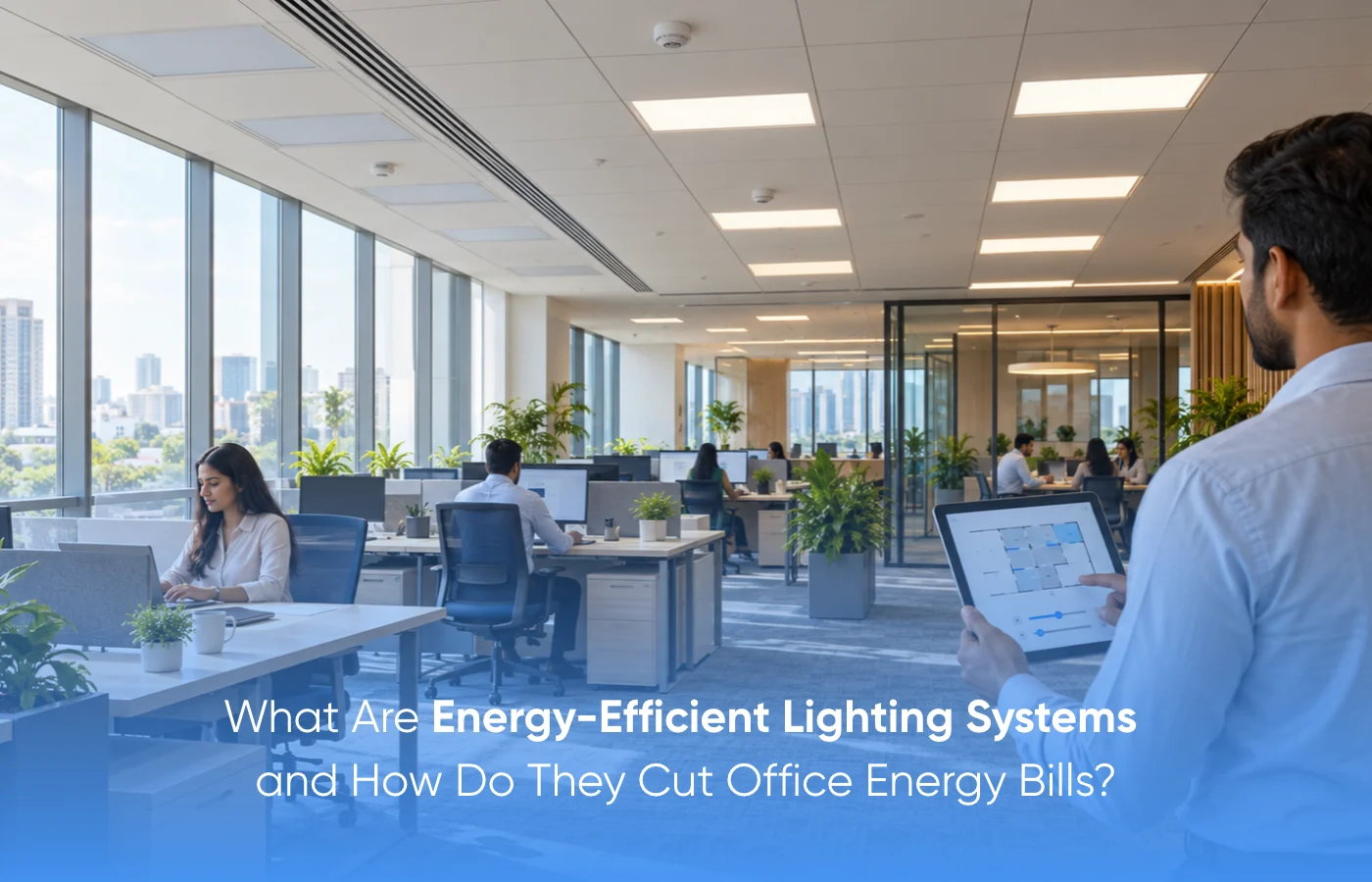
Energy-efficient lighting systems reduce the energy needed for lighting by integrating sensors, daylight harvesting, and remote scheduling along with the installed fixtures at an installation site.The existing fixtures stay in place. The setup involves upgrading the fixture drivers and installing sensors across the circuits.
Most offices see a close to 25% reduction in lighting-related energy bills after installation.
1. Sensors handle auto-on and auto-off based on occupancy.
2. Daylight sensors auto-dim lights based on incoming natural light.
3. A single dashboard gives admins remote, scheduled control.
4. Emergency circuits stay untouched for safety during outages.
Every facility manager eventually hits the same wall. The electricity bill keeps climbing, and lighting quietly eats up a big share of it, even hours after everyone has gone home for the day. Replacing every fixture seems like the only fix, but that route is expensive and disruptive. Most teams assume there is no other option, so the bill keeps climbing instead of getting fixed.
Energy efficient lighting systems solve this without touching a single fixture. The existing LED setup stays exactly where it is. Only the driver changes, along with a layer of sensors spread across the circuits. That one shift turns a passive lighting setup into something that responds to the building in real time.
How Does the Energy Efficient Lighting System Operate Without Replacing the Fixtures?
This energy efficient lighting system works due to the replacement of the driver in each fixture, while not changing the fixtures themselves. Sensors are installed on all the circuits, and they start communicating with the driver as soon as the system goes online.
1. Driver-Level Upgrade: Only the internal driver gets swapped inside each fixture. The housing, lens, and existing LED hardware stay exactly as installed.
2. Circuit-Based Sensors: Installation occurs across pre-existing circuits as opposed to within the fixtures, making installation easy.
3. No Need for Rewiring: The ceiling construction and wiring are not altered in the process, minimizing any disruptions in the installation process.
4. Open Standard: The energy-efficient lighting system utilizes DALI 2.0, which is an international open protocol. This minimizes the risks of being locked into the particular vendor’s proprietary system.
5. Protects Current Investment: The facility having just installed LED lighting will not have to invest again for control over the same fixtures.
Due to its nature as an open protocol, DALI 2.0 allows for flexibility regarding future additions to the system.
What Role Do Dual-Tech Sensors Play in Energy Efficient Lighting Systems?
Dual technology sensors have infrared and ultrasonic sensors embedded in one unit. This particular design is the one responsible for making energy efficient lighting systems work efficiently in office premises. The two sensors interpret their environment in different ways. Incorporating the two sensors in one unit allows the system to get multiple inputs before making any decision regarding light switching.
1. One device captures both infrared and ultrasonic information.
2. Walking detection differentiates actual occupancy from people walking through the room.
3. Real-time information gathered by sensors can be used in other building systems such as HVAC.
4. Device condition monitoring flags malfunctioning sensors so facility teams can act before a space goes unlit.
Smart walking detection is a specific part of this setup. These algorithms have been created to make the distinction between an occupant who is about to settle for work and another who simply walks by. The lighting management system will only react when there is actual occupancy and not just because of any movement.
How Do Energy Efficient Lighting Systems Respond to Natural Daylight?
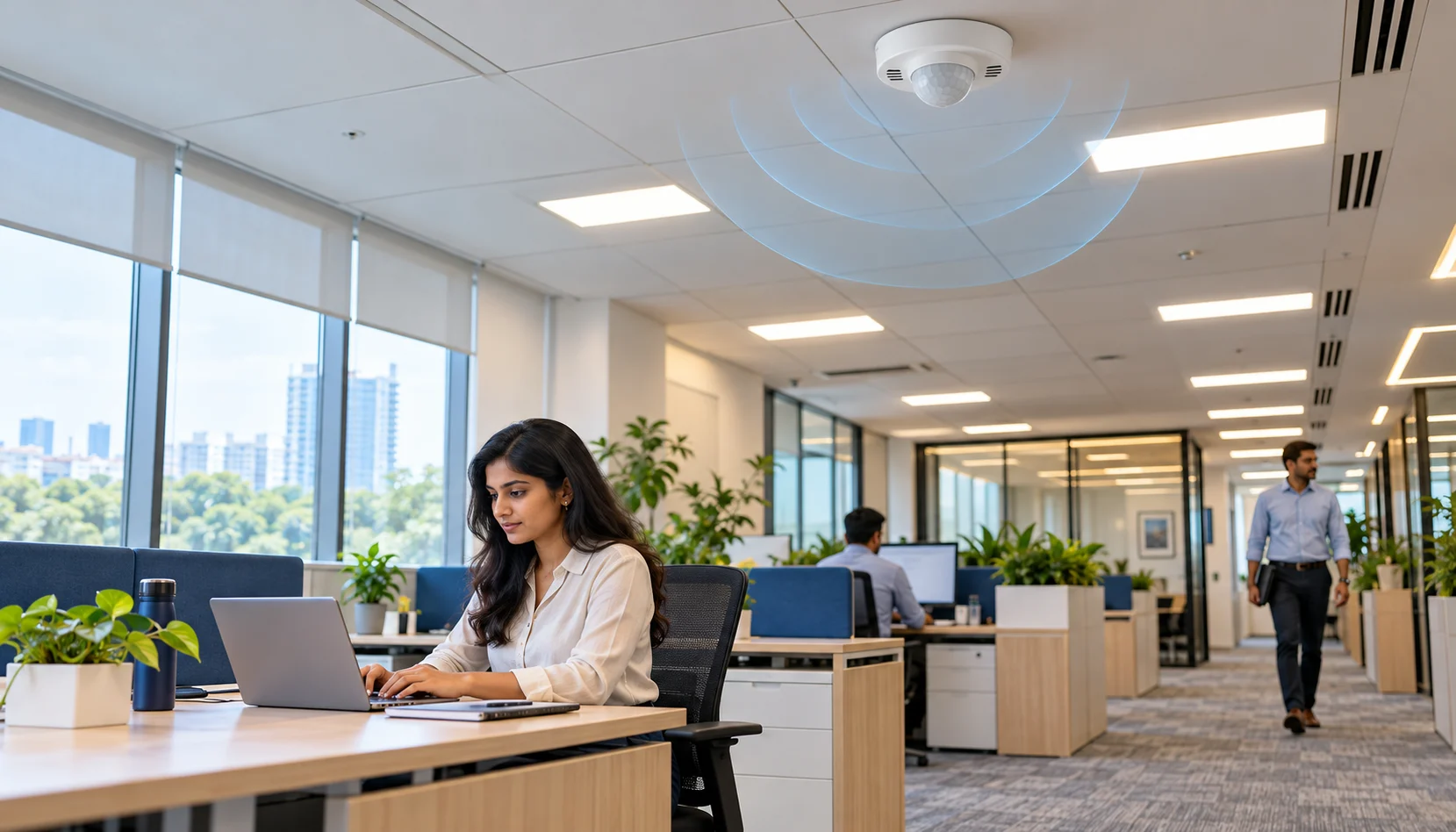
Daylight sensors measure the amount of light coming from outside and then automatically control the electric light accordingly. When there is more daylight coming into the building, electric light is controlled to reduce its output, while the reverse happens in case of decreased daylight.
1. Continuous Dimming: The output varies continuously between 0% and 100% rather than switching between pre-determined light outputs.
2. Window-to-Zone Control: Zones closer to windows get more dimming when it is brighter outside than zones farther away from the light coming in through windows.
3. Layering of Schedules: Scheduling rules can be layered with the daylight control by location, space type, time of day, and day of week.
4. Desired Output for Comfort: The objective is to have the light at an appropriate level of comfort at the desk height and not just save energy.
It is precisely such an approach that makes the energy-saving lighting system different from a simple timer system. The timer works the same way every day irrespective of the actual daylight conditions. The daylight sensor reacts to the real light in the space.
Can Energy Efficient Lighting Systems Sync With Meeting Room AV Setups?
Yes, energy efficient lighting systems can sync directly with existing AV integration in meeting rooms. The moment an HDMI cable connects a laptop, projector, or tablet to the room’s display, the lighting shifts automatically into presentation mode.
1. AV-Triggered Dimming: Lighting shifts into presentation mode the instant a presenting device connects via HDMI, with no manual input required.
2. AV System Integration: The system integrates directly with existing AV setups already installed in many meeting and conference rooms.
3. Zero Manual Switching: Staff no longer need to locate a dimmer or switch before a presentation starts, especially during client calls.
4. Reverts Automatically: After the presentation device is disconnected, lighting gets restored to its default settings of occupancy and daylight sensing.
It’s this little thing that helps B2B facilities with consecutive client meetings avoid one more process no one wants to do. Lighting actions are related to the actual use of the space, rather than to switching.
How Do Energy Efficient Lighting Systems Support Circadian Rhythm Lighting?
The circadian lighting system, also known as human-centric lighting, is configured according to employee requirements and preferences but is controlled completely by the admin in charge and not by individual employees. It thus ensures that the environment remains constant on the whole floor but does take into consideration how employees work during the day.
1. Parameters are set up and managed by the admin staff and not individually at each desk
2. It allows for schedule customization according to the way a particular floor or team works.
3. This is supplemented by the daylight and occupancy controls which are already present in the same system.
4. Parameters may be updated centrally by the admins without visiting individual rooms and fixtures.
It is in line with the same design philosophy as the other parts of the system. The admin has one dashboard, one interface, and one tool to manage lighting behavior in the building.
How Much Can Energy Efficient Lighting Systems Reduce Energy Bills?
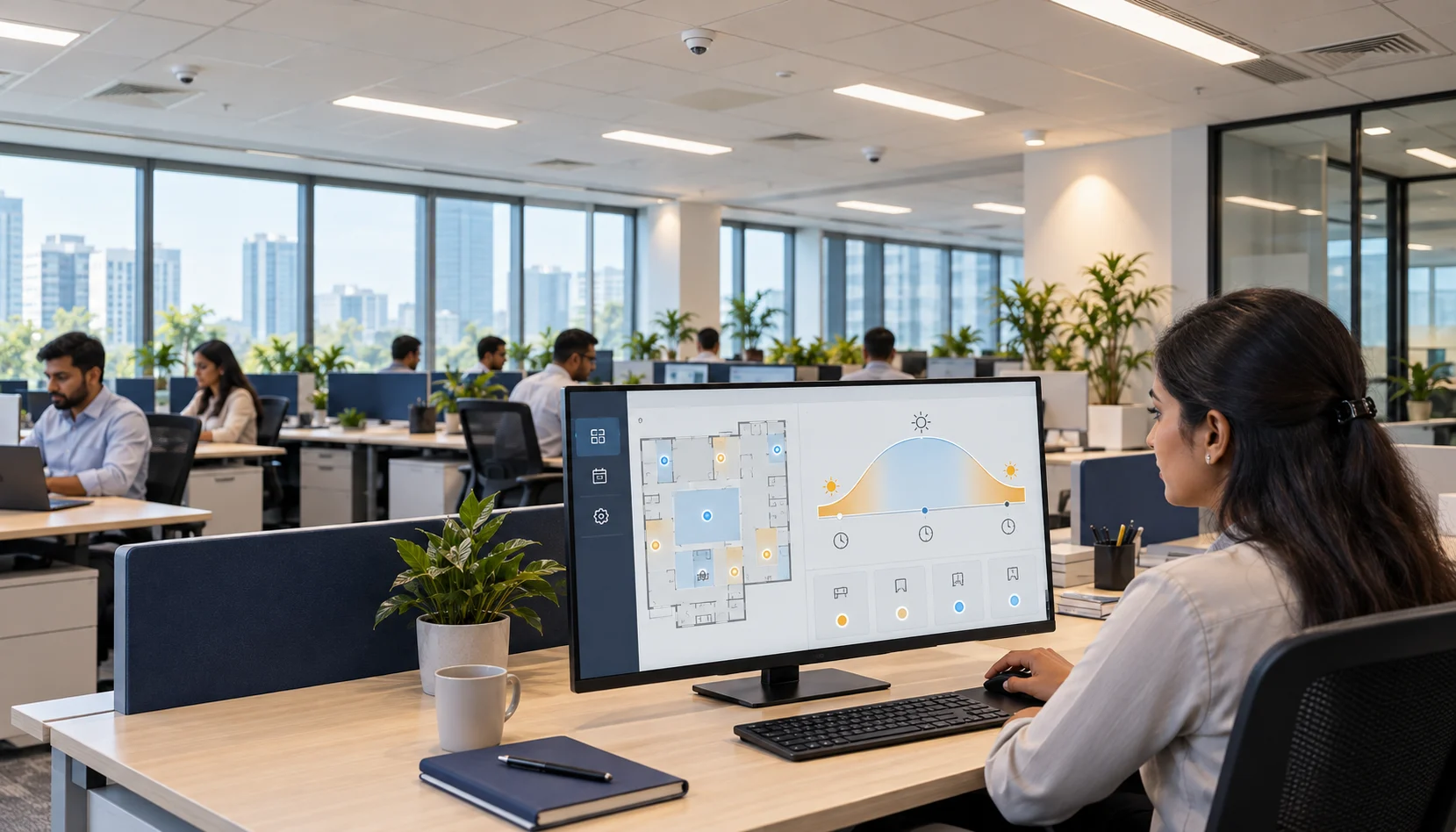
1. Dashboard Control for the Administration: Administration controls all the lights in the building by sitting in a single console without visiting each floor individually.
2. Scheduling on Basis of Usage: Schedules depend upon actual usage and are not based upon general office hours.
3. Manually Overriding Schedules: For special scenarios such as after-hour working, overriding of schedules can be done without disturbing the automation process.
4. Continuous Feedback from Sensors: Feedback data from sensors is continuously displayed in the dashboard, something that was never there before.
What Happens During Emergencies or Manual Overrides?
1. Independent Circuits: The emergency lighting circuit will always be independent of the automation layer even in a situation where there is total failure of the system.
2. Manual Override Possible: The facility personnel have the chance to manually override any circuit without affecting the automation process.
3. Emergency Lighting Compliance Ensured: The emergency lighting circuit will not depend on the functionality of the automation layer.
4. No Shared Dependencies: A failure or outage in the smart lighting layer has no effect on emergency circuit operation.
This separation is built into the smart lighting system from the start. Facility managers do not have to choose between automation and the reliability of emergency lighting during a critical moment.
How Does AastroTech Deliver Energy Efficient Lighting Systems for Workplaces?
2. Dual Tech sensors that use infrared and ultrasonic sensors together in one
3. Smart walking detection, device monitoring, and performance measurement integrated on the dashboard
4. It is known as the standard in numerous industries due to its high-quality QA through all stages
The AastroTech solution ensures control of the clients with the help of sensing in real time, notifications about the health of the device, and remote scheduling from one dashboard. If there is an option to choose between the installation of new lighting and payment of increased bills, this is the technology for you.
Conclusion:
The energy-efficient lighting system converts what was a mere cost sink into a controllable aspect for the facility. The driver-only retrofit ensures you protect your investments in fixtures; the sensors reduce wastage of energy while the dashboard provides admin control without you having to walk all the floors in person. This option is for any facility experiencing rising energy costs.
Your fixtures don’t need to change for your lighting bill too.
Get in touch with AastroTech and find out what a driver-only upgrade could save you.
FAQs:
1. Do energy efficient lighting systems require replacing existing LED fixtures?
No, energy efficient lighting systems work with existing LED fixtures already installed. Only the driver inside each fixture gets replaced, along with sensors added across the circuits, which keeps installation fast and avoids the cost of a full fixture replacement.
2. How much can energy efficient lighting systems reduce a facility's energy bill?
Energy-efficient lighting systems have recorded about 30% reduction in energy bills in practical installations through the integration of occupancy sensors, daylight dimming, and scheduling into an entire facility and not through one feature alone.
3. Is it possible to control energy-efficient lighting systems remotely?
Yes, energy-efficient lighting systems come with one dashboard through which administrative staff can remotely control the lighting system of an entire facility. The scheduling can take into account actual usage and manual overriding is always an option in exceptional cases.
4. Do energy efficient lighting systems affect emergency lighting circuits?
No, emergency lights and their circuits stay completely separate from the automated system. Energy efficient lighting systems are designed to leave these circuits untouched, so emergency lighting continues working normally regardless of automation status elsewhere.
5. What standard do energy efficient lighting systems typically run on?
All good quality energy-efficient lighting systems utilize DALI 2.0 technology, which is an open international protocol rather than a closed one. This ensures that there is no vendor lock-in and makes sure that any future devices can also be made compatible with the current system.
6. How long does it take to install an energy efficient lighting system in an existing office?
Installation timelines depend on facility size, but since only the driver and sensors get added, energy efficient lighting systems typically install faster than a full fixture replacement, with minimal disruption to daily office operations during the process.
7. Can energy efficient lighting systems work across multiple floors or buildings at once?
Yes, energy efficient lighting systems are designed to scale across floors and buildings through a single dashboard. Facility teams managing multiple sites can monitor and schedule lighting centrally instead of handling each location separately.
8. Does AastroTech customize energy efficient lighting systems for different office layouts?
Yes, AastroTech configures energy efficient lighting systems around each facility’s existing layout, zones, and usage patterns. Sensor placement and scheduling get tailored to how the space actually operates, rather than applying one fixed setup everywhere.
9. What kind of support does AastroTech provide after installing an energy efficient lighting system?
AastroTech provides ongoing device monitoring and performance tracking as part of its energy efficient lighting systems. Facility teams get notified of malfunctioning sensors or drivers early, so issues get addressed before they affect lighting operations.
10. Why should a facility choose AastroTech for energy efficient lighting systems over other vendors?
AastroTech builds energy efficient lighting systems on DALI 2.0, an open standard, avoiding vendor lock-in common with proprietary systems. Combined with AV system integration and dual-tech sensors, AastroTech delivers a flexible, future-ready lighting setup.