
In the rush of office hours and endless tasks, the primary office light is often overlooked in the greater scheme of workplace efficiency. Office lighting can boost employee well-being and productivity without being noticed…..
Circadian Rhythm Lighting: The Secret to Enhancing Employee Well-being and Productivity
Introduction
In the rush of office hours and endless tasks, the primary office light is often overlooked in the greater scheme of workplace efficiency. Office lighting can boost employee well-being and productivity without being noticed. Circadian Rhythm Lighting combines light science with job productivity.
What is Circadian Rhythm Lighting?
Let’s start with a brief overview of Circadian Rhythm Lighting before getting into the specifics of how it might change the workplace. The natural, internal process that controls the sleep-wake cycle and repeats approximately every 24 hours is called the “circadian rhythm.” Our body uses it to adjust to the outside environment so that we feel alert during the day and tired at night.
Circadian rhythm lighting is a system of lights intended to replicate the patterns of natural daylight. It modifies during the day to correspond with the body’s natural circadian rhythm, assisting in controlling employees’ mood, energy levels, and, yes, even productivity.
Why Does It Matter?
Most people spend more time indoors than usual. What could be the reason? Traditional office lighting systems don’t support our natural rhythms. Fluorescent lights shine brightly all day, regardless of the time of day or the need for a post-lunch energy boost. It can cause various concerns, including weariness, stress, and even a decrease in productivity.
The Circadian Lighting system helps employees stay alert and focused during work. The intensity lessens as the evening approaches by adjusting the color temperature and intensity of the light to match the natural daylight pattern.
How Does Circadian Rhythm Lighting Work?
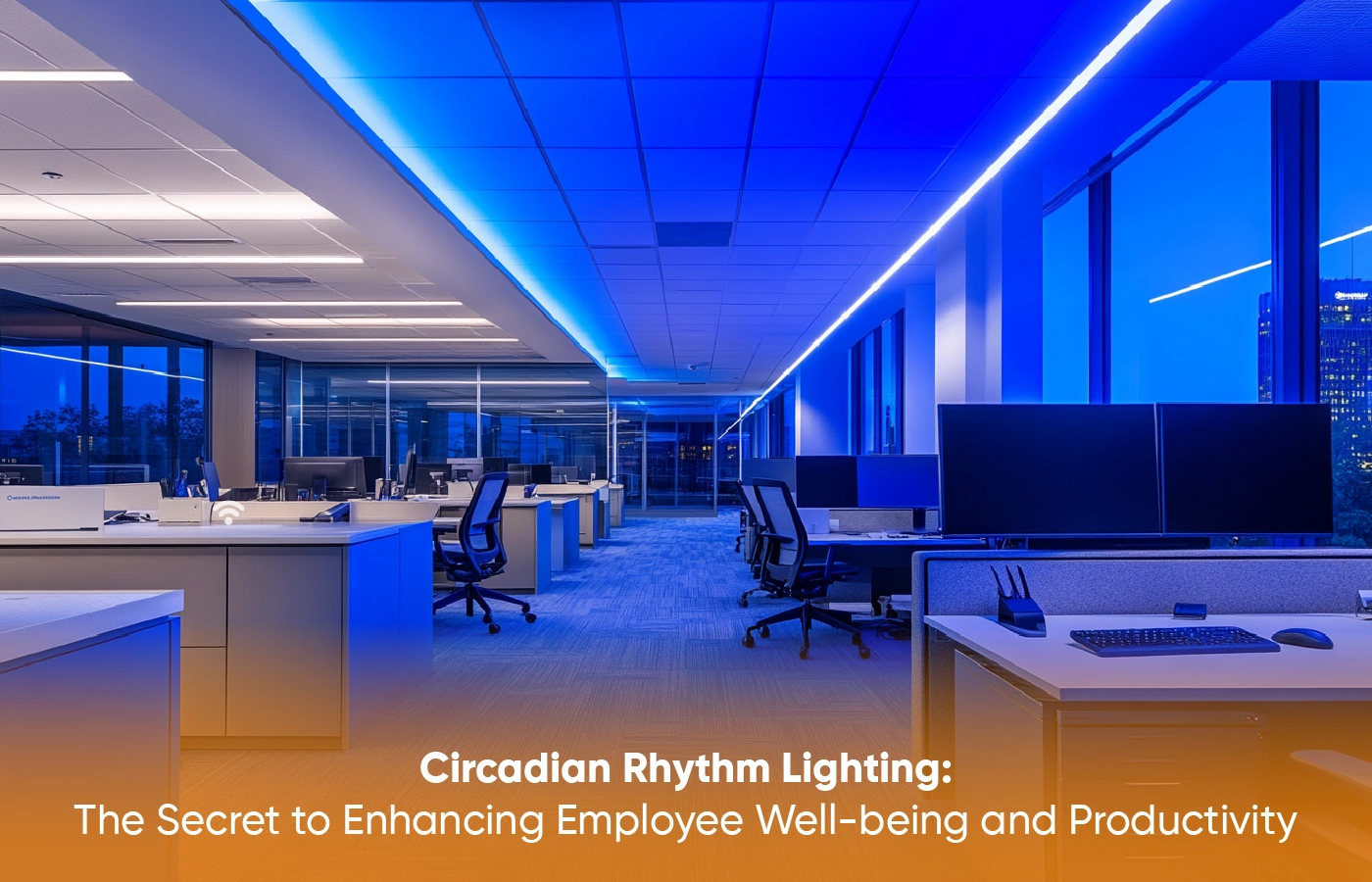
The circadian Rhythm lighting system uses LED technology that can change color temperature from cool, rejuvenating blue light in the morning to warm, calming light in the evening. Blue light, equivalent to natural daylight, causes the body to generate less melatonin and more cortisol, helping employees feel more focused and alert.
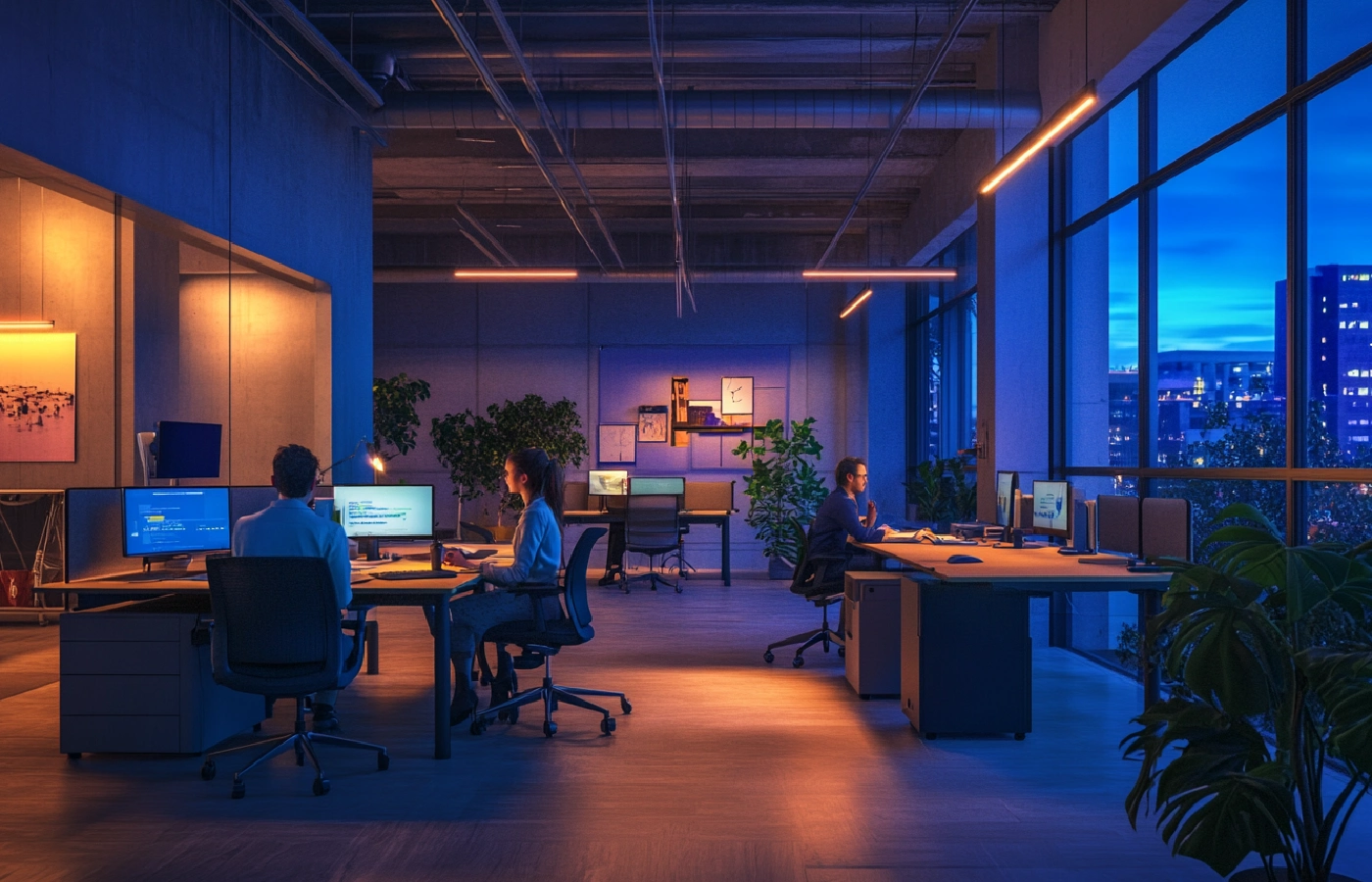
As the day advances, the lighting system gradually dims the blue light and transforms it into a warmer, softer light. This transformation helps the body generate more melatonin, helping employees unwind and prepare for the evening. It results in the workforce feeling more comfortable with their natural rhythm, less tired, and more constructive.
Boosting Productivity and Well-being—Naturally

Circadian Rhythm Lighting improves sleep quality, reduces stress, and increases productivity.
By combining the work environment with natural human rhythms, organizations can create a workplace where employees are more engaged, concentrated, and satisfied. Employee satisfaction is known as the secret to a successful business.
Ready to Make the Switch?
Circadian Rhythm Lighting is more than just a trendy word. It is an investment in employees’ health. Creating a workspace that encourages natural human rhythms has become necessary due to the blurred lines between work and home life.
Implementing a circadian rhythm lighting system in the workplace is a smart step toward fostering a healthier and more productive environment. Therefore, when employees are situated under the radiance of the workplace lighting, reflect on whether these lights benefit or detrimentally hinder their performance. If the second option is the case, it may be appropriate to illuminate the advantages of Circadian Rhythm Lighting.
Conclusion
Implementing Circadian Rhythm Lighting Systems in workspaces is effective for employee productivity. By simulating natural light patterns, these systems help regulate employees’ bio clocks, reducing fatigue and enhancing focus throughout the day. As businesses intend to create healthier and more productive work atmospheres, changing to circadian lighting is an advanced approach that combines the workspace with natural biological rhythms, ultimately supporting a more rejuvenating and effective workforce.
Reach out to us at info@aastroelectronics.com to learn all about Circadian Rhythm Lighting. Follow Aastro Tech Electronics on Linkedin, Facebook, and Instagram to stay updated.
FAQs
What is circadian rhythm lighting?
Circadian rhythm lighting is a smart lighting system designed to mimic natural daylight patterns. It adjusts light intensity and colour temperature throughout the day to align with the human biological clock and support alertness, comfort, and overall well-being.
How does circadian rhythm lighting benefit employees?
Circadian lighting helps employees stay alert during working hours and feel relaxed later in the day. By supporting natural sleep-wake cycles, it reduces fatigue, improves focus, lowers stress levels, and contributes to better mental and physical well-being.
Why is office lighting important for productivity?
Office lighting directly affects concentration, mood, and energy levels. Poor lighting can cause eye strain and fatigue, while biologically aligned lighting helps employees remain focused, engaged, and comfortable, supporting consistent productivity throughout the workday.
How does circadian rhythm lighting work in offices?
Circadian lighting systems use tunable LED technology to shift from cooler, brighter light in the morning to warmer, softer tones later in the day, closely following natural daylight changes to support the body’s internal rhythm.
What role does blue light play in circadian lighting?
Blue-enriched light in the morning suppresses melatonin production and increases alertness. Circadian systems use controlled blue light exposure early in the day, then gradually reduce it to support relaxation and healthy sleep patterns.
Can circadian lighting reduce workplace fatigue?
Yes. By aligning artificial lighting with natural biological rhythms, circadian lighting reduces visual strain and energy dips, especially post-lunch fatigue, helping employees feel more balanced, comfortable, and productive across the working day.
Is circadian rhythm lighting suitable for all workspaces?
Circadian lighting is suitable for offices, corporate campuses, healthcare facilities, and educational environments. Any workspace where people spend long indoor hours can benefit from lighting that supports comfort, focus, and long-term well-being.
How does circadian lighting support employee well-being?
Circadian lighting supports well-being by improving sleep quality, reducing stress, and maintaining consistent energy levels. Employees feel more in sync with their natural rhythms, which positively impacts mood, engagement, and overall workplace satisfaction.
Does circadian rhythm lighting help with hybrid or flexible work models?
Yes. Circadian lighting adapts well to hybrid workplaces by maintaining healthy lighting conditions regardless of occupancy patterns, ensuring employees experience consistent comfort and alertness whenever they are present in the workspace.
Why should organizations invest in circadian rhythm lighting systems?
Investing in circadian lighting demonstrates a commitment to employee health and performance. It creates healthier work environments, supports productivity, and aligns modern workplaces with science-backed approaches to human-centric design.