
What Is a Washroom Monitoring System and Why Every Public Facility Needs One?
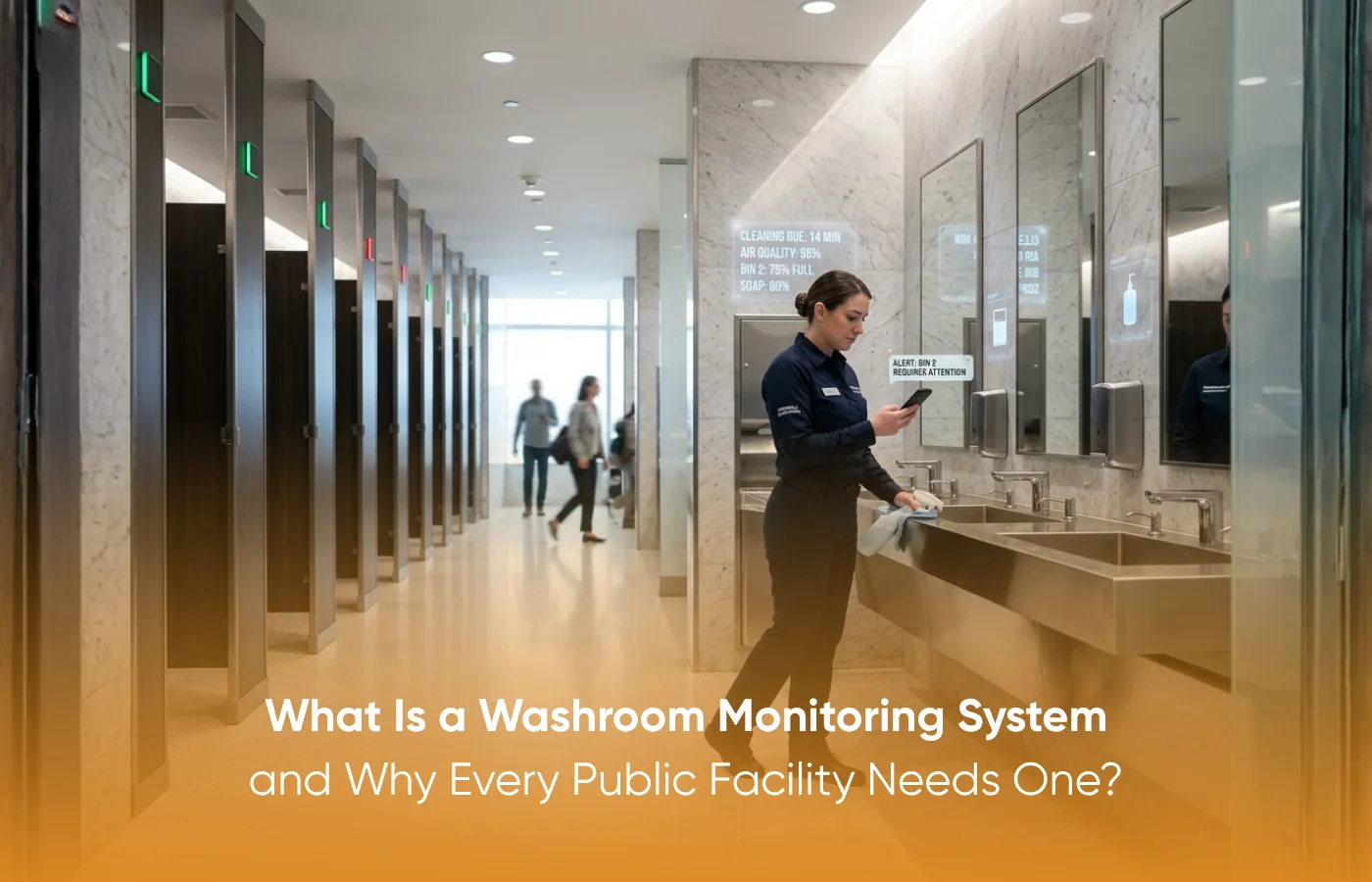
A washroom monitoring system uses IoT sensors to track washroom occupancy, odor, supplies stock, leaks, bin levels, and users feedback sending automated alerts to staff before conditions deteriorate.
● Alerts cleaning teams when soap, paper, or towels are running low
● Detects NH3(Ammonia) and H2S(Hydrogen Sulphide) gas levels and responds before odor becomes a complaint
● Detects IAQ (Indoor Air Quality) along with Temperature & Humidity levels to trigger automated alerts for preventive maintenance
● Catches water leaks early, before structural damage sets in
● Monitors waste bins and notifies staff before overflow
At a busy transit hub, a facility manager noticed a recurring issue. Cleaning checks were scheduled every two hours, yet complaints were coming in every forty minutes. The problem wasn’t the cleaning team; it was the gap between fixed schedules and actual conditions!
In high-footfall environments, usage is unpredictable. A single flight can send hundreds of passengers to restrooms within minutes, overwhelming even the best-planned schedules. Fixed schedules simply can’t keep up with dynamic demand.
This is where a washroom monitoring system makes a difference. Sensors track conditions in real time, and alerts are triggered the moment attention is needed, ensuring issues are addressed when they occur, not when the next round is due.
What Sensors Go into a Washroom Monitoring System?
1. Occupancy Sensors:
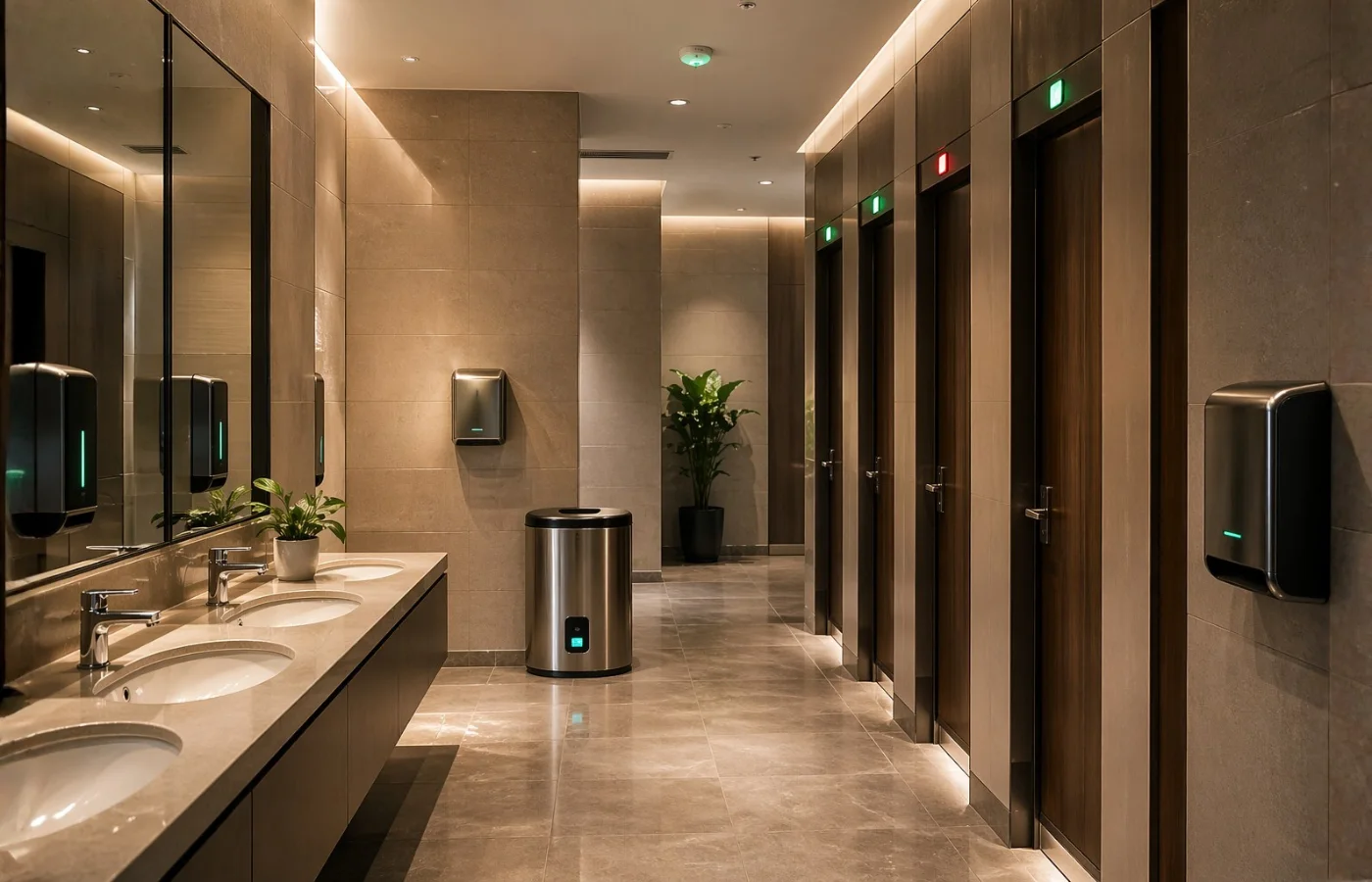
Located at stall entryways, they can record every entrance and exit. Outside the restroom, a display shows which stalls are available. Inside the restroom, the system collects usage data for each stall throughout the day, and when the preset threshold is reached, an automatic cleaning notification is triggered. The cleaning schedule is based on the restroom’s actual use as against preset schedules.
2. Supply Level Sensors:
Installed on soap, toilet paper, and paper towel dispensers. When the level of any product falls below the preset value, the staff responsible for this part of the washroom are notified immediately via their phones or the facility dashboard. The products are always replaced before they run out. Predominantly ‘Shift based’ maintenance are needed in Enterprise & high usage Washrooms which are seamlessly handled.
3. Odor Detection Sensors:
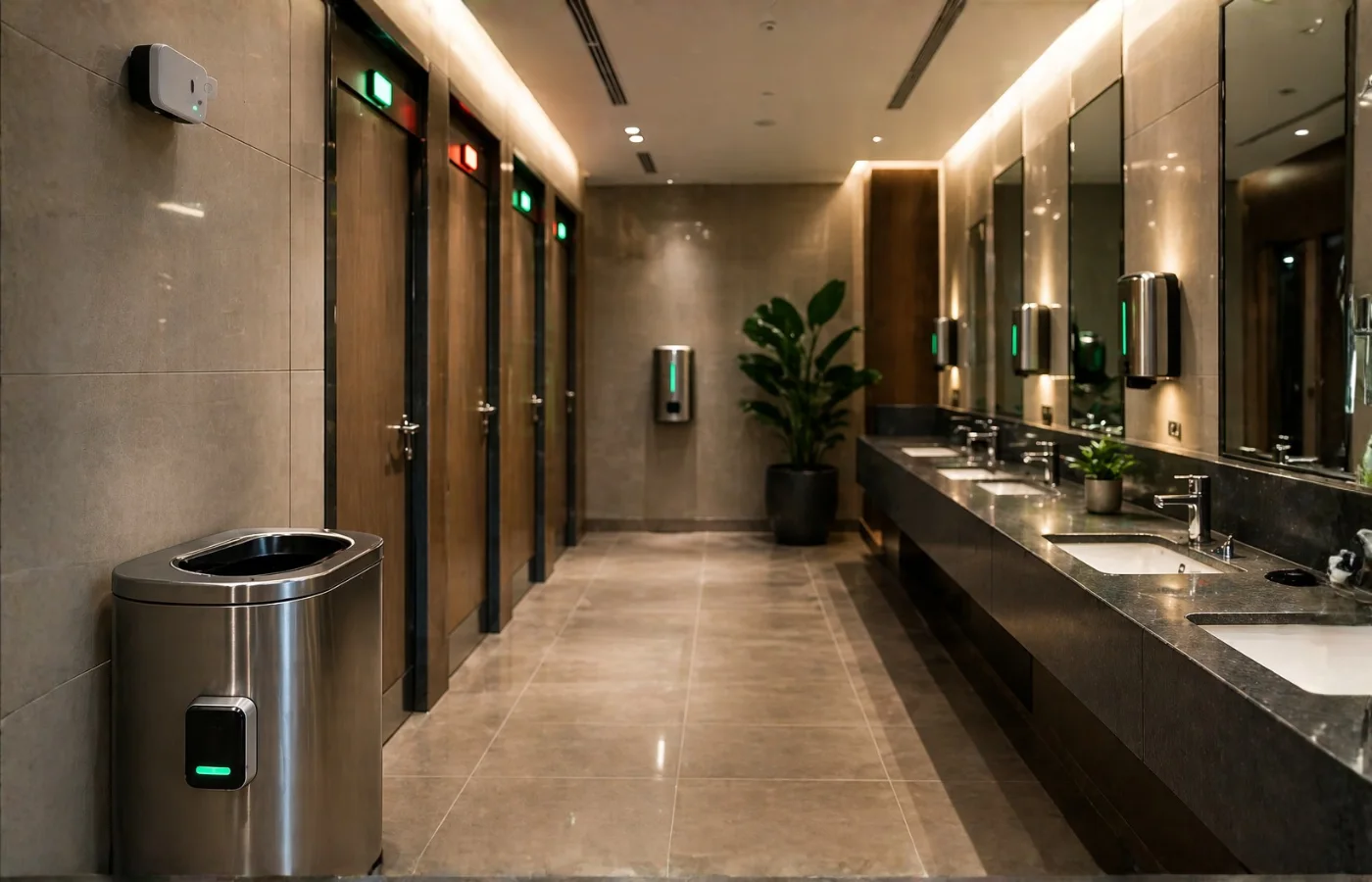
Ammonia and hydrogen sulfide are responsible for the majority of washroom odor complaints. These sensors measure continuously and generate an alert the moment either reading exceeds the configured limit. Certain installations take this further, triggering ventilation systems or air freshening units automatically without requiring a staff member to respond in person first.
4. Leakage Detection Sensors:
These water-sensing devices are positioned in close proximity to pipes, joints, and the bases of plumbing fixtures and respond promptly when moisture is detected. Over a period of days, even the slightest trickle can lead to mold growth, and if left unchecked, it can rapidly escalate repair costs. Optionally, Floor wetness detection is feasible too with Ceiling mounted thermal imaging sensors depending on installation asks.
5. Garbage Bin Load Sensor:
With ultrasonic or weight-based sensors, these monitor the fill level of each garbage can and alert when it reaches its maximum capacity, usually around 80%. There is ample time for the staff to take action without inconveniencing the facility’s users.
How the Washroom Monitoring System Works?
1. Uninterrupted Data Collection:
2. Thresholds Replace Manual Watching:
During setup, acceptable limits are defined for every parameter the system tracks. From that point forward, every incoming reading is automatically checked against those limits. A bin closing in on capacity, an odor reading climbing past its limit, supplies level going below a threshold needing refill, a stall that has been occupied far longer than normal, any of these produces an alert without anyone needing to be present at a monitoring station.
3. Targeted, Actionable Notifications:
The alert is sent to the housekeeping staff member assigned to that specific washroom (Shift basis), with the exact issue already identified. There is no broadcast to a group, no unclear notification requiring interpretation. The problem has been diagnosed before the notification is even sent. All that is left is to act on it.
4. Data That Compounds in Value Over Time:
Every alert, every usage pattern, every supply cycle is stored and accessible. A few weeks into operation, the records begin revealing things that were previously invisible, such as restrooms consistently coming under pressure, which supplies deplete fastest, and which fixtures flag problems repeatedly. Staffing decisions, procurement volumes, and maintenance schedules gain a factual foundation they previously lacked.
What Changes After a Washroom Monitoring System Is Installed?
1. Resources Follow Actual Need:
Staff move in response to confirmed alerts rather than completing rounds regardless of whether anything needs attention. Each visit addresses a real, identified issue. Unnecessary trips fall away over the course of a week, and because monitoring runs without interruption, nothing that actually requires attention goes unaddressed.
2. Maintenance Costs Become Predictable:
3. Sustainability Reporting Has Numbers Behind It:
4. The Experience Inside the Washroom Improves:
Facilities That See the Strongest Return in Washroom Monitoring System:
1. Airports and Transit Terminals:
Demand here shifts without warning. A delayed departure, an early arrival, any of these can render a pre-planned cleaning schedule irrelevant within minutes. Live sensor data gives operations teams the visibility to move resources where they are actually needed rather than where a morning projection placed them.
2. Shopping Malls:
Public holidays, weekend crowds, and other public events push footfall well beyond what a static roster can reliably handle. Alert-driven cleaning responds to actual floor conditions rather than lagging behind them.
3. Hospitals and Healthcare Facilities:
In these environments, hygiene standards carry direct accreditation implications. Every alert raised and every cleaning action taken is logged with a timestamp. That record provides inspection-ready documentation without placing any additional administrative burden on cleaning staff or the Supervisors.
4. Corporate Campuses:
Several washrooms blocks spread across multiple floors, all visible from a single dashboard. Facility teams maintain oversight of the entire building without having to manage separate tracking for each location.
5. Stadiums and Event Venues:
Why AastroTech for Washroom Monitoring System Deployment?
Before recommending any configuration, AastroTech conducts a site assessment covering traffic patterns, floor layout, infrastructure, and hygiene requirements. What gets deployed is built around how that facility actually runs sensor placement, alert thresholds, and notification routing, all of which reflect that. Post smart washroom installation, maintenance visits, remote diagnostics, and data reviews remain part of the ongoing arrangement.
Conclusion:
Reactive washroom management has a ceiling. No matter how well a cleaning team is deployed, fixed schedules can’t match unpredictable demand. Real-time sensor data can.
AastroTech delivers the full stack of washroom intelligence as a managed service: occupancy, odor, supplies, leaks, and bin levels, all feeding into one dashboard with alerts that reach the right person at the right moment which aids in significant enhancement of service efficiency, user satisfaction, wellness & hygiene.
Connect with AastroTech to transform your manually managed Restrooms into Smarter ones.
FAQs:
1. What separates a washroom monitoring system from a general facility alert platform?
General platforms cover building-wide conditions. A washroom monitoring system tracks washroom-specific parameters, such as occupancy, gas levels, supplies, moisture, and bin capacity, generating alerts that cleaning and maintenance teams can act on directly.
2. How does the system respond differently during peak hours?
It runs on live data. High footfall means more thresholds are crossed, and more alerts are triggered. During quieter periods, activity drops naturally. The system portrays actual conditions rather than applying a fixed rhythm.
3. Can additional sensors be introduced after initial deployment?
Yes. The modular design permits new sensors, parameters, and alert configurations to be added as requirements grow. Initial installations are built with future expansion in mind.
4. Does it work in facilities with limited network infrastructure?
Yes. Wireless configurations operating over low-power wide-area networks or cellular connections are available. The platform is cloud-based and accessible from any internet-connected device.
5. What makes AastroTech's approach different?
AastroTech starts with a site assessment before making any recommendations. Ongoing maintenance, diagnostics, and data reviews are included from the outset, not added later as optional services.
6. How is the system maintained once live?
Scheduled site visits, remote diagnostics, and firmware updates are part of the arrangement. If a sensor drops offline, both the facility manager and AastroTech are notified simultaneously.
7. Can it integrate with existing building infrastructure?
Yes. Open APIs and standard protocols enable connections to building management platforms, access control systems, and existing dashboards already in use.
8. What reporting does the system provide?
Every alert, cleaning response, supplies usage stats, users feedback, and occupancy pattern is timestamped and accessible through a role-based dashboard, offering a factual basis for staffing, procurement, and maintenance decisions.
9. How quickly do results become visible?
Cleaning becomes more targeted within the first few weeks. Measurable cost reductions from fewer unnecessary rounds and early leak intervention typically occur within 3 to 6 months.