Circadian Lighting for Offices: Built for Your Team
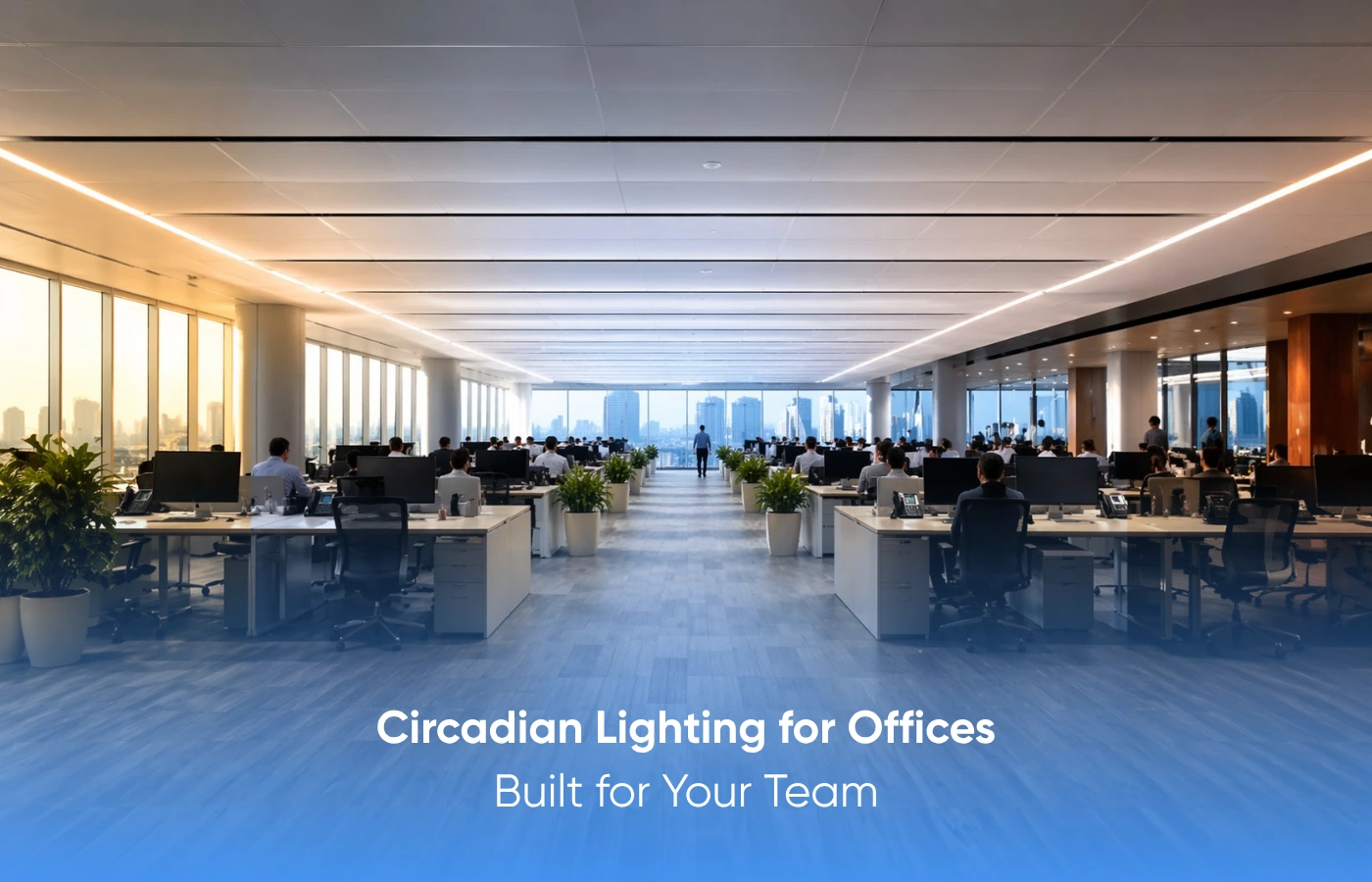
Circadian lighting for offices is a dynamic lighting system that shifts color temperature and brightness across the workday to align with the body’s natural 24-hour cycle. Morning hours use cool, high-intensity light to drive alertness. Through the afternoon, the system transitions to warmer, dimmer tones, supporting the body’s natural wind-down and protecting sleep quality.
Key Benefits
1. Performance:
2. Health and Wellbeing:
Reduced headaches, eye strain, and fatigue translate directly into lower absenteeism.
3. Sleep Quality:
Accurate light signals across the day regulate the sleep-wake cycle, improving next-day alertness and energy.
Key Considerations
1. Light Timing:
: Morning light runs cool and bright. Afternoon light shifts progressively warmer, supporting the body’s natural transition toward rest.
2. Light Spectrum:
Effective systems include the blue spectrum range around 490nm, which signals the brain to maintain alertness during working hours.
3. Automation:
Smart controllers automate the transition of color temperature and brightness throughout the day, eliminating manual adjustments.
Businesses invest heavily in workplace strategy. Ergonomic furniture, open-plan layouts, collaboration tools, wellness programs. Each year, the list adds something new.
One variable gets left out of almost every conversation. It runs in the background of every working hour and affects how employees think, perform, and sleep. That variable is light, not just whether there is enough of it, but how it behaves across the day.
Circadian lighting for office spaces deals with this directly. The evidence is solid, the technology works, and the results businesses are seeing go beyond what most expect from a lighting change.
What is Circadian Rhythm?
Circadian rhythm lighting is a lighting system designed to match the body’s natural 24-hour cycle by adjusting light intensity and color throughout the day.
It mimics natural daylight patterns to support how humans feel, think, and sleep.
In many corporate environments, long hours, screen exposure, and static lighting disrupt natural sleep cycles. This often leads to poor sleep, low energy levels, reduced focus, and inconsistent productivity during the day.
Circadian lighting addresses this by aligning indoor lighting with the body’s natural rhythm. By adjusting brightness and colour through the day, it helps employees stay alert when needed, maintain steady productivity, and support better sleep patterns after work.
What Is Circadian Lighting for Office Spaces?
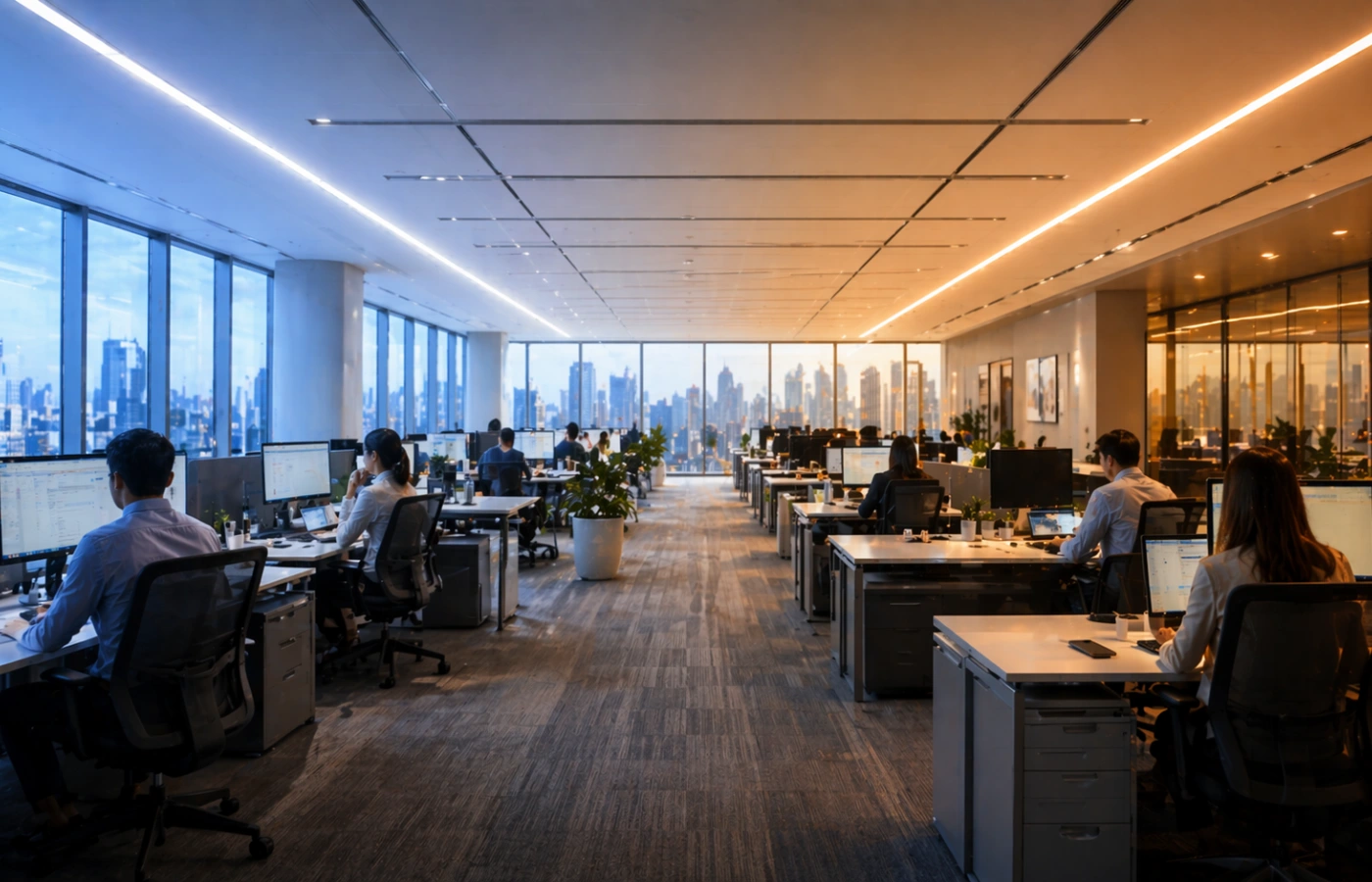
Standard office lighting is static. One color, one brightness level, on from morning until close. Circadian lighting for office moves. It tracks the natural behavior of daylight across the working day rather than holding a fixed position from the start.
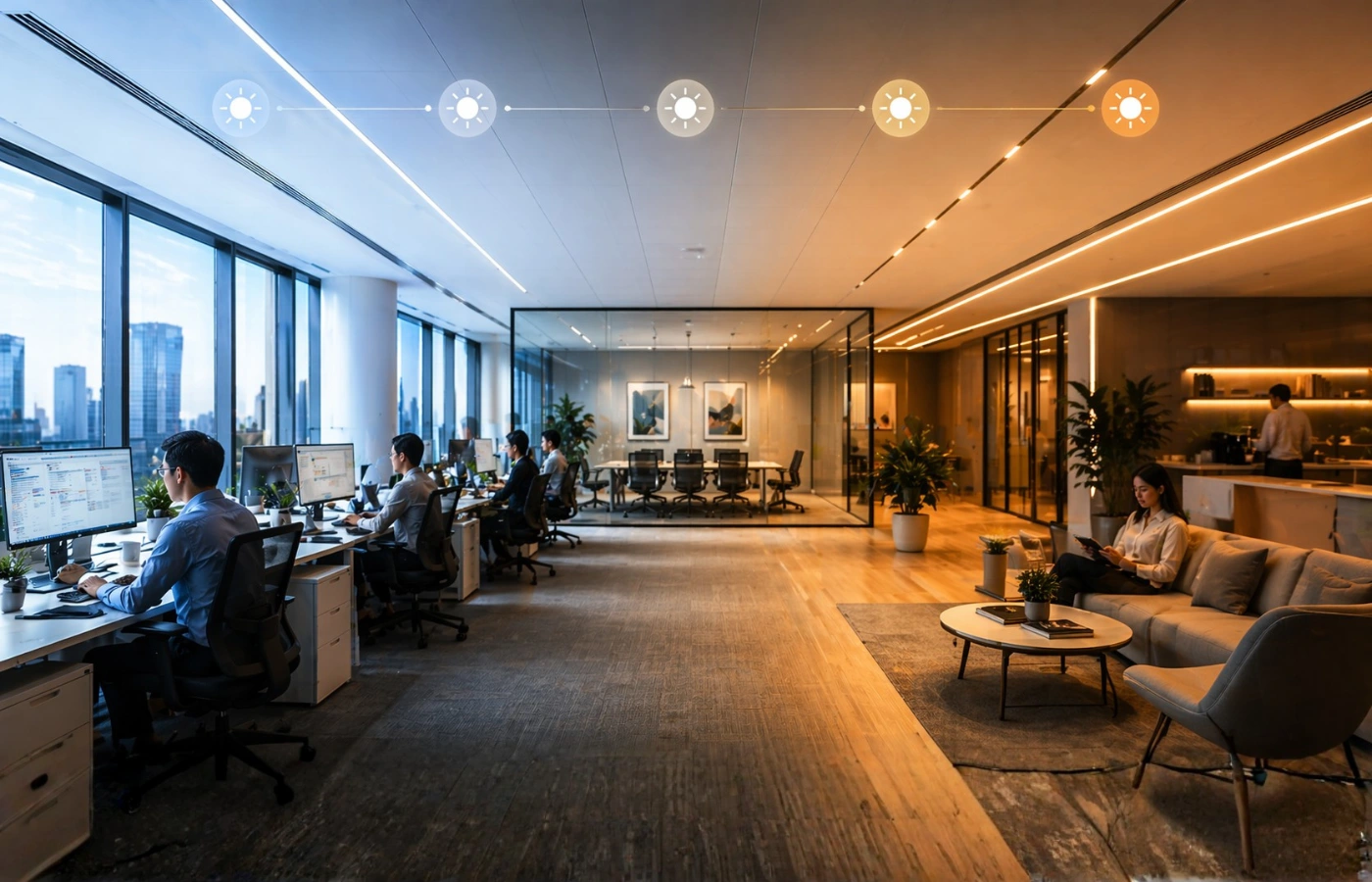
Morning light in a circadian-equipped office runs cool and bright. Through the afternoon, it shifts toward warmer, softer output. By the end of the day, the light signals to the body that the working period is ending, just as natural sunlight does.
Four components drive how it works:
1. Color temperature progression:
The circadian lighting for office starts with cool, blue-white light and ends with warm amber. This arc mirrors daylight and gives the body’s internal clock the signals it needs throughout the day.
2. Brightness matched to working demands:
3. Receptor activation:
4. Tunable LED infrastructure:
How does circadian lighting for office implementation work?
A full workspace rebuild is not required. Most businesses phase it in, with each stage bringing substantial improvement.
1. Lighting audit:
The process starts with assessing the current environment, which areas have usable natural light, which do not, and where problems are most visible. Deep open-plan floors, interior offices, and basement areas are the priority zones.
2. Using existing natural light:
Existing natural light can do more work before a full system goes in. Reflective surfaces, glass partitions, and adjustable blinds push daylight further into the office without removing it.
3. Tunable LED installation:
A tunable LED system with a programmed dimming controller is the core of any circadian setup. Color temperature and brightness adjust automatically on a schedule matched to the working day. Most systems integrate into existing building management infrastructure without major additional work.
4. Zone-based design:
Workstations need cooler, brighter light during peak hours. Meeting rooms need flexible settings. Breakout and rest areas carry warmer light throughout without affecting focus zones.
5. Schedule alignment:
Why Office Lighting Directly Affects Performance and Business Results?
The human body runs on a 24-hour internal clock. That clock depends on light signals to regulate alertness, energy, hormones, and sleep. When office lighting does not deliver those signals, the body loses its primary cue for the day. The effects are practical: lower output, more sick days, and raised operational costs.
1. Afternoon Productivity Drop
Flat, warm midday lighting sends an early evening signal to the body. It starts winding down hours before the workday ends. In documented cases, adjusting the light environment eliminates the drop.
2. Output Quality and Speed
Studies comparing standard and circadian-aligned offices show consistent gaps in task speed, error rates, and recall, differences that repeat daily and compound over a month or quarter. Employees under circadian lighting complete tasks up to 25% faster with fewer errors.
3. Sleep Disruption
Without accurate signals from daytime light, melatonin cycles become irregular. Employees sleep less, take longer to fall asleep, and accumulate a growing sleep deficit that directly affects next-day focus and decision-making.
4. Absenteeism
Fatigue, eye strain, and headaches linked to inadequate lighting accumulate over time and surface in attendance data. Businesses that have introduced circadian lighting report measurable reductions in sick days, particularly in fatigue- and stress-related absences.
What does AastroTech provide?
AastroTech designs and installs smart lighting systems specific to each client’s building and workforce. Every project starts with the details that drive the outcome: physical layout, natural light conditions, working schedules, and business goals. The system is calibrated before going live and works correctly from day one.
From assessment through to installation, calibration, and ongoing support, AastroTech manages the entire process. For teams that have spent years working under lighting never built around human performance, that is where the change begins.
Conclusion:
Lighting is not a background detail. It directly affects how employees think, perform, and recover every single working day. Businesses that have addressed it are seeing measurable results in output, attendance, and energy costs. The technology is proven, and the process is simple. If your office is still running on static lighting, it is worth finding out what that is costing you.
Talk to AastroTech today and get a lighting assessment for your workspace.
FAQs:
1. What is circadian lighting, and how does it differ from regular office lighting?
Circadian lighting adjusts color temperature and brightness across the workday to mirror natural sunlight. Standard lighting maintains a single fixed setting all day. Circadian lighting helps employees stay in sync with their internal clocks, improving alertness, energy, and sleep quality.
2. How quickly do employees notice a difference?
Changes in awareness and energy are typically noticed within 1 to 2 weeks. Measurable gains in task speed and accuracy generally show within the first month.
3. Is circadian lighting for office viable for smaller businesses?
Yes. It scales through different budgets. Tunable LED systems qualify for energy efficiency incentives, consume 20–50% less power, and most businesses recover the investment within three to five years.
4. Does circadian lighting for office help shift workers?
Shift workers benefit most. A system calibrated to actual shift times delivers the right biological cues at the right points, stabilizing sleep and improving shift performance.
5. Does circadian lighting for the office reduce the importance of natural light?
No. It extends natural light where it exists and replicates its function where it does not. Interior and windowless areas receive the biological cues the body would otherwise lack.
6. What happens when office lighting is left unaddressed?
Disrupted sleep, persistent fatigue, headaches, and reduced concentration build gradually and show up in attendance and output data before most businesses identify lighting as the cause.
7. Which industries see the strongest results?
Knowledge work, healthcare, education, and manufacturing. Any setting where focus, accuracy, and employee health carry direct operational weight stands to benefit.
8. How does AastroTech deliver circadian lighting for office?
AastroTech begins with an in-depth site assessment covering layout, natural light access, workforce schedules, and business outcomes. The right system is then sourced, configured, and installed to meet the workspace’s specific requirements.
9. What makes AastroTech different from a standard lighting contractor?
Standard contractors deliver to a specification. AastroTech builds toward a defined outcome. Full value comes only when the system is accurately calibrated to how a specific workforce operates.
10. Can AastroTech install Circadian lighting for office in a building that is currently in use?
Yes. Retrofit installations in active buildings are standard practice. Circadian lighting for office work is implemented in planned phases, using the existing electrical system to reduce disruption.