

Integrated Building Management System
Smart Solutions for Modern Workspaces
Key Components and Functions
HVAC Control
Manages heating, ventilation, and air conditioning to maintain comfort while reducing energy consumption.
Lighting and Power
Automates lighting schedules and optimizes overall power usage.
Security and Safety
Combines CCTV, access control, fire alarms, and smoke detection into one system.
Data Analysis
Uses AI and machine learning to identify patterns, enabling predictive maintenance and improving system reliability.
Key Benefits
Improved Efficiency
Enhances system performance and reduces operational costs by optimizing energy usage.
Centralized Control
Enables facility managers to monitor and manage all systems from a single dashboard.
Enhanced Security
Strengthens safety through integrated surveillance and alert systems.
Sustainability
Supports environmentally responsible operations by reducing energy consumption and carbon footprint.
Why Do Modern Workspaces Need an Integrated Building Management System?
Modern workspaces are larger, more complex, and more dynamic than ever before. Without an IBMS, building systems function in silos, and that disconnect has a direct operational cost:
● Higher energy consumption
● Delayed maintenance responses
● Poor space utilization
● Inconsistent occupant comfort
An IBMS eliminates these inefficiencies through centralized control, real-time monitoring, and automated decision-making, helping organizations reduce costs while improving operational reliability.
How Does an Integrated Building Management System Work?
Centralized Control
Real-Time Data Monitoring
Automated System Adjustments
Scalability and Integration
Energy Optimization
A peer-reviewed study published by Springer confirms that IBMS can effectively maintain indoor air quality across seasons but only when FM professionals are involved from the design stage. Buildings where engineers were consulted after construction saw their IBMS control strategies fall short of design intent.

Streamlined Facility Operations
Centralized control reduces manual intervention, enabling facility teams to focus on strategic improvements rather than routine tasks.
What Does an Integrated Building Management System Actually Deliver?
Improved Energy Efficiency
By automating energy-intensive systems, IBMS ensures resources are used only when required reducing operating costs and environmental impact.
Enhanced Security and Safety
Integrated security systems provide centralized monitoring, access control, and real-time alerts, enabling faster response to incidents.
Predictive Maintenance
IBMS identifies equipment anomalies early, allowing proactive maintenance that minimizes downtime and extends asset life.
Better Occupant Experience
Optimized lighting, temperature, and air quality improve comfort, employee satisfaction, and productivity.
Will It Work with Your Existing Infrastructure?
Integrated Building Management Systems can be implemented in both new and existing buildings including facilities with legacy infrastructure. Modern IBMS solutions support:
● Third-party protocols
● Legacy system integration
● Phased deployment
Older offices, refurbished campuses, and co-working spaces can transition into smart, efficient, and future-ready environments without complete system replacement.
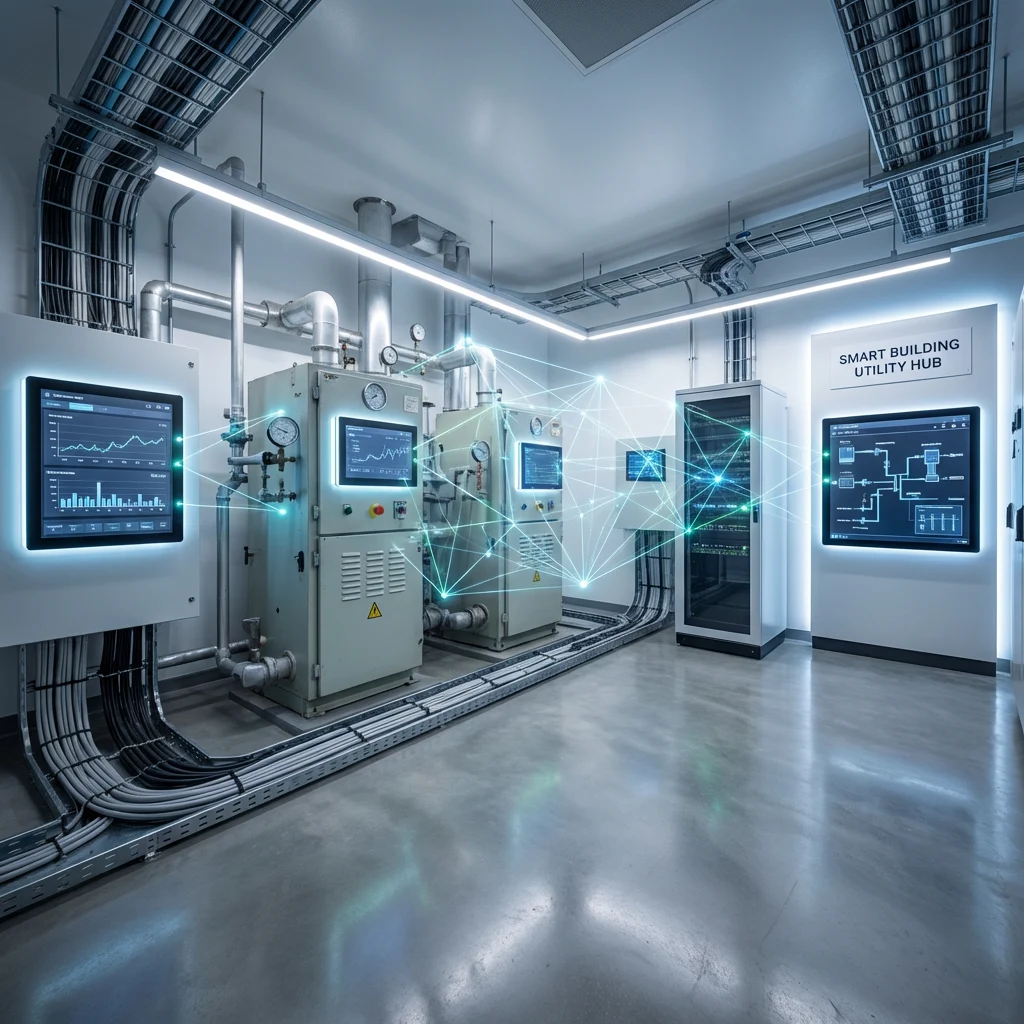
According to ScienceDirect, a Building Management System is a critical element for intelligently managing energy demand across HVAC, lighting, electrical, and plumbing systems. For complex workspaces, an Integrated Building Management System takes that control further automating it all from one platform.
How Does IBMS Create a Competitive Advantage for Facilities Management Teams?
IBMS enables facilities teams to move from reactive management to proactive, data-driven operations:
● Higher operational efficiency
● Reduced risk through automated alerts
● Better space utilization insights
● Improved compliance and reliability
What Role Does an Integrated Building Management System Play in the Future of Workspaces?
As workplaces evolve toward hybrid models and sustainability-driven operations, Integrated Building Management Systems are becoming strategic assets not optional tools. IBMS enables:
● Smarter energy and resource usage
● Responsive, people-centric environments
● Scalable infrastructure for future technologies
It forms the digital backbone of modern smart buildings, supporting long-term efficiency, innovation, and resilience.

Transform your building into a smarter, more efficient workspace with Aastrotech’s Integrated Building Management System.
FAQs
1. What is an Integrated Building Management System (IBMS)?
An IBMS is a centralized platform that monitors, controls, and optimizes a building’s HVAC, lighting, energy, security, and other critical systems from a single interface.
2. How is IBMS different from a Building Management System (BMS)?
A BMS typically manages individual building systems, while an IBMS integrates multiple systems including mechanical, electrical, IT, and security into one unified and intelligent platform.
3. What systems are integrated into an IBMS?
An IBMS commonly integrates HVAC, lighting, energy management, access control, surveillance, fire systems, occupancy sensors, and sometimes IT and workspace management platforms.
4. Why do modern workspaces need an IBMS?
Modern workspaces need an IBMS to manage complex operations efficiently, reduce energy consumption, improve occupant comfort, and enable data-driven facilities management.
5. Can IBMS be implemented in existing or older buildings?
Yes. IBMS can be implemented in existing buildings using third-party drivers and protocols that integrate legacy systems without requiring complete infrastructure replacement.
6. How does IBMS help reduce energy consumption?
IBMS reduces energy consumption by monitoring usage patterns and automatically adjusting HVAC, lighting, and power systems based on occupancy and time of use.
7. Does an Integrated Building Management System improve security?
Yes. IBMS improves security by centralizing access control, surveillance, and alert systems enabling faster response to incidents and better risk management.
8. How does IBMS support facilities and maintenance teams?
IBMS provides real-time alerts, predictive maintenance insights, and centralized control, helping facilities teams prevent failures, reduce downtime, and manage assets efficiently.
9. Is IBMS suitable for large campuses and multi-building facilities?
Yes. IBMS is highly scalable and well-suited for large campuses, corporate parks, hospitals, and multi-building environments requiring centralized oversight.
10. What are the long-term benefits of implementing IBMS?
Long-term benefits include lower operational costs, improved sustainability, better occupant experience, enhanced compliance, and future-ready building infrastructure.
